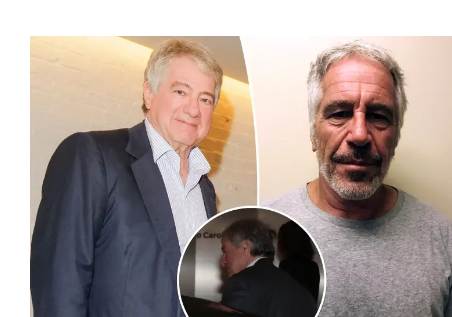
“Hours After Congress Exposed Leon Black’s Handwritten Poem in Jeffrey Epstein’s ‘Birthday Book,’ MoMA Rolled Out the Red Carpet for Him at a Swank Gala”
“The billionaire financier, already under fire for his ties to Epstein, made a high-society appearance at MoMA just hours after Congress published his poem — fueling outrage and raising questions about accountability in the art world.”
The fallout from Jeffrey Epstein’s shadowy social circle continues to ripple through America’s cultural elite. This week, financier Leon Black found himself at the center of controversy once again when, just hours after Congress released his handwritten poem from Epstein’s infamous “birthday book,” he attended a glittering gala at the Museum of Modern Art (MoMA) in New York City.
The “birthday book,” compiled in 2003 by Epstein’s confidante Ghislaine Maxwell, contained personal notes, sketches, and poems from some of Epstein’s closest associates in honor of his 50th birthday. Among them was a rhyming verse penned by Black, praising Epstein with lines that described him as both “liver” and “lover.” The lighthearted, celebratory tone of the poem — released this week by the House Oversight Committee — has triggered renewed anger over the depth of Black’s ties to the disgraced financier.
Yet, as the political world absorbed the explosive release, Black was spotted smiling at MoMA’s high-profile dinner event. The timing could not have been more jarring: within hours of the poem’s exposure, one of America’s most prestigious art institutions was rolling out the red carpet for a man whose association with Epstein has already forced him from positions of power.
Black, who resigned as MoMA’s chairman in 2021 amid backlash over his $158 million financial dealings with Epstein, remains a significant donor and board member. Alongside him at the gala was billionaire Glenn Dubin, another figure scrutinized for his own long-running ties to Epstein. Their presence underscored what critics say is a troubling unwillingness by cultural institutions to sever ties with figures linked to the disgraced sex offender.
“MoMA talks about progress and accountability, yet continues to celebrate the same names tied to Epstein’s inner circle,” one activist fumed on social media. “It’s like nothing has changed.”
A spokesperson for Black defended his attendance, insisting he “remains committed to supporting the arts” and regrets his past association with Epstein. They emphasized that Black was unaware of Epstein’s criminal behavior at the time of their interactions.
But the optics tell a different story. For many, the juxtaposition of Black’s poetic ode surfacing in Congress and his glamorous MoMA appearance on the same night underscores how wealth and influence can shield the powerful from lasting consequences.
The controversy also places MoMA itself under renewed scrutiny. While the museum has long benefited from Black’s deep pockets, critics argue that continued association threatens its reputation. “MoMA is one of the world’s leading art institutions. It must choose whether to represent progress or perpetuate privilege,” said one cultural watchdog group.
For now, Leon Black remains both a benefactor and a lightning rod — a man who straddles the intersection of finance, philanthropy, and scandal. With Epstein’s name once again dominating headlines, his poem has become more than just a verse; it’s a reminder of how deeply Epstein’s shadow still stretches into the highest echelons of art, money, and power.
And as Black raises a glass at MoMA, the public is left to wonder: who is really being celebrated, and at what cost?