“Jimmy Kimmel Chokes Back Tears Insisting He ‘Never Meant to Make Light’ of Charlie Kirk’s Death — But Critics Slam Him for Refusing to Apologize”
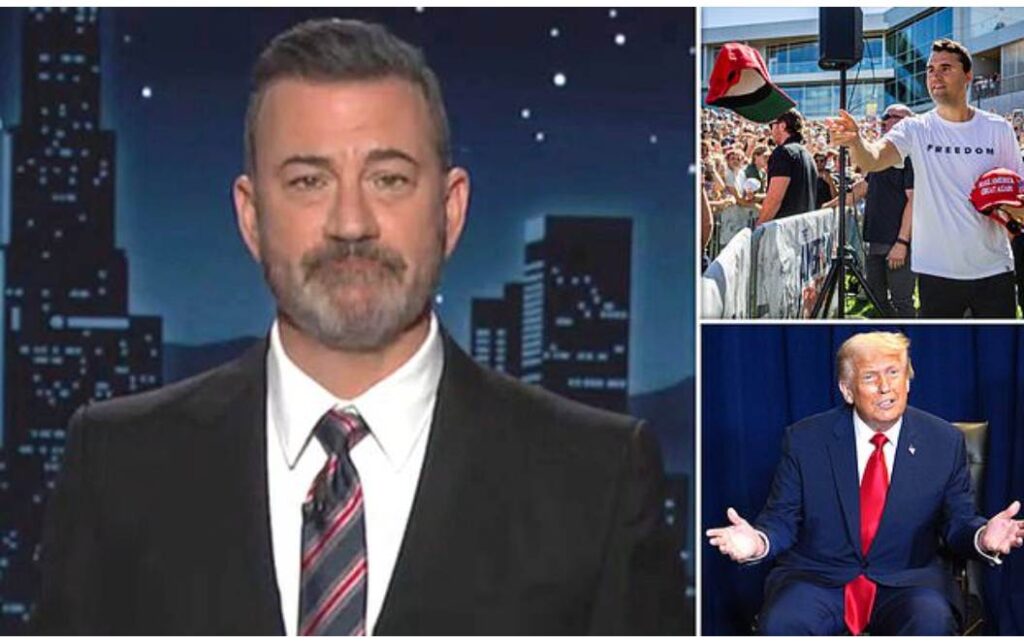
Jimmy Kimmel’s highly anticipated return to Jimmy Kimmel Live! after his suspension was as emotional as it was controversial. The late-night host, who had been under fire for comments made following the tragic death of conservative activist Charlie Kirk, delivered a tearful statement on Tuesday night. But while Kimmel insisted he never intended to “make light” of Kirk’s killing, he notably stopped short of offering a direct apology — a move that has divided audiences and sparked a fresh round of debate.
“Obviously it was never my intention to make light of the murder of a young man,” Kimmel said, visibly fighting back emotion. He went on to clarify that he did not mean to single out any group for blame, describing the gunman as “a deeply disturbed individual.” Kimmel admitted his words may have come across as “ill-timed or unclear, or maybe both,” but stressed that his intent had been misunderstood.
The late-night host praised Erika Kirk, Charlie Kirk’s widow, for her remarkable grace in the wake of tragedy. “She has shown more forgiveness than I probably deserve,” Kimmel said, his voice trembling. “I am grateful to her.” His acknowledgment of Erika drew some sympathy from viewers, who noted that Kimmel seemed genuinely shaken.
Still, the absence of a straightforward apology did not go unnoticed. Outlets like the Associated Press and New York Post highlighted that Kimmel’s comments fell into the category of clarification rather than contrition. “He expressed regret, but he didn’t actually say ‘I’m sorry,’” one critic wrote on social media. Others accused Kimmel of trying to soften backlash without fully taking responsibility. “This is classic Hollywood damage control,” tweeted another, “all tears, no accountability.”
The controversy erupted weeks earlier when Kimmel’s on-air remarks were widely interpreted as minimizing Kirk’s killing. The backlash led to ABC suspending the host, an extraordinary move in late-night television. His return was therefore not just a comeback but also a test of how he would handle the delicate balance of grief, accountability, and public scrutiny.
Supporters of Kimmel argue that his statement showed humility and vulnerability, and that his tears were evidence of genuine remorse even if he didn’t frame it as an apology. “It’s clear he was trying to make amends,” one viewer commented. Detractors, however, remain unconvinced. “Words matter. If he truly regretted it, he would say ‘I apologize,’” wrote another critic.
The fallout raises broader questions about the role of comedians in addressing political and cultural flashpoints. Kimmel himself touched on the subject during his monologue, warning against efforts to silence voices in comedy. “We can’t stop speaking out,” he said, hinting that his suspension was the result of outside pressures, including political ones.
Whether his audience accepts his explanation remains to be seen. But one thing is certain: Jimmy Kimmel’s attempt to walk the tightrope between regret and apology has only ensured that the debate surrounding him will continue — long after the cameras stopped rolling.