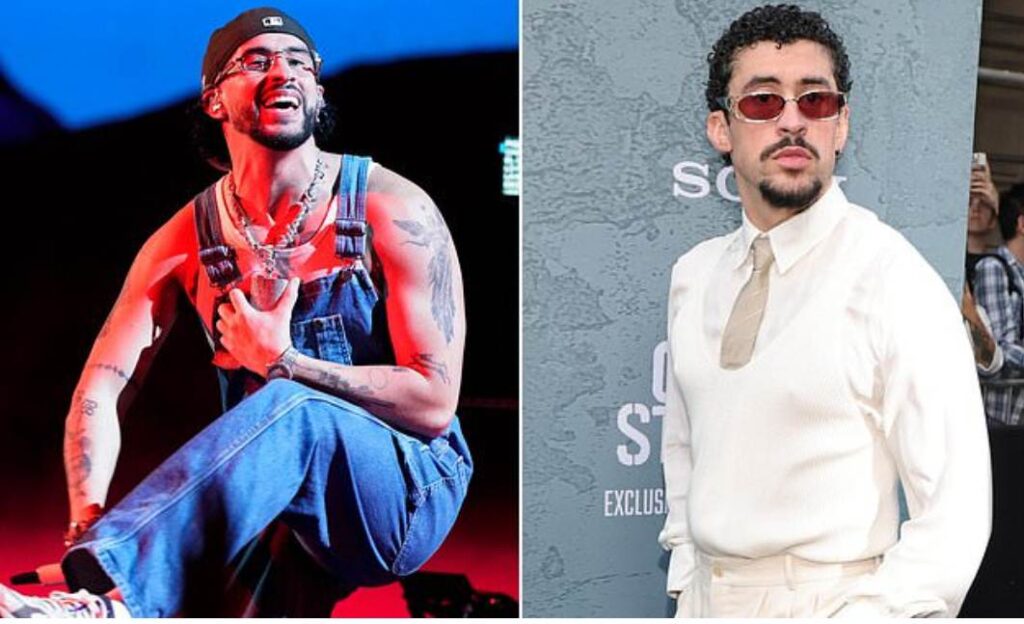
Bad Bunny’s Super Bowl Shock: Latin Superstar Chosen for 2026 Halftime Show Despite Controversial ICE Comments That Spark National Debate
The NFL has made its boldest Super Bowl move yet, officially announcing Bad Bunny as the headliner for the 2026 Apple Music Halftime Show — a decision that has already ignited excitement, controversy, and conversation across the globe.
The Puerto Rican megastar, known for breaking barriers and shattering records with his reggaetón and Latin trap hits, will take the stage at Levi’s Stadium in Santa Clara, California on February 8, 2026. For many, it marks a long-overdue celebration of Latin culture on one of the biggest stages in sports and entertainment. But the announcement comes just weeks after Bad Bunny’s outspoken comments about U.S. Immigration and Customs Enforcement (ICE), adding a layer of political tension to what is usually billed as the world’s biggest party.
In a candid interview, Bad Bunny revealed why he refused to include U.S. dates on his latest tour, explaining that he didn’t want his fans — many of whom are Latino and undocumented — to feel unsafe attending his shows. “I don’t want my people to fear that ICE could be waiting outside a concert,” he said. While his comments resonated deeply with supporters, they also sparked backlash from critics who accused him of making the Super Bowl “political.”
Despite the controversy, the NFL, Apple Music, and Roc Nation doubled down on their choice, with executives praising Bad Bunny as a “global icon” whose artistry and cultural impact transcends borders. The 30-year-old artist, born Benito Antonio Martínez Ocasio, expressed his gratitude, calling the moment “an honor for my people, my culture, and our history.”
For fans, the announcement is nothing short of electrifying. Bad Bunny’s performances are legendary, blending raw energy, storytelling, and visual spectacle. His halftime show is expected to deliver not only a catalog of his chart-topping hits like “Tití Me Preguntó” and “Dakiti,” but also a powerful representation of Latin pride on a stage watched by more than 100 million viewers worldwide.
Still, the ICE comments loom large, threatening to overshadow the music. Social media quickly erupted with mixed reactions — some hailing him as a hero who stands up for marginalized communities, others criticizing the NFL for choosing a performer who has made what they see as divisive statements. Political commentators have already begun speculating whether the show will include subtle messages about immigration, Puerto Rico’s status, or cultural identity.
Yet, if history is any indicator, controversy often fuels Super Bowl halftime success. From Beyoncé’s politically charged 2016 performance to Shakira and Jennifer Lopez celebrating Latin culture in 2020, the show has become a platform for more than just entertainment. Bad Bunny’s presence could continue that evolution, blending art with activism in a way that sparks both celebration and debate.
With just months to go before the big game, one thing is certain: Bad Bunny’s halftime show won’t be forgettable. Whether it’s remembered as a cultural milestone, a lightning rod for controversy, or both, the NFL has placed its bets on an artist who thrives on shaking up the status quo.
As the singer himself declared: “This is for my people. This is for my culture. This is for history.”