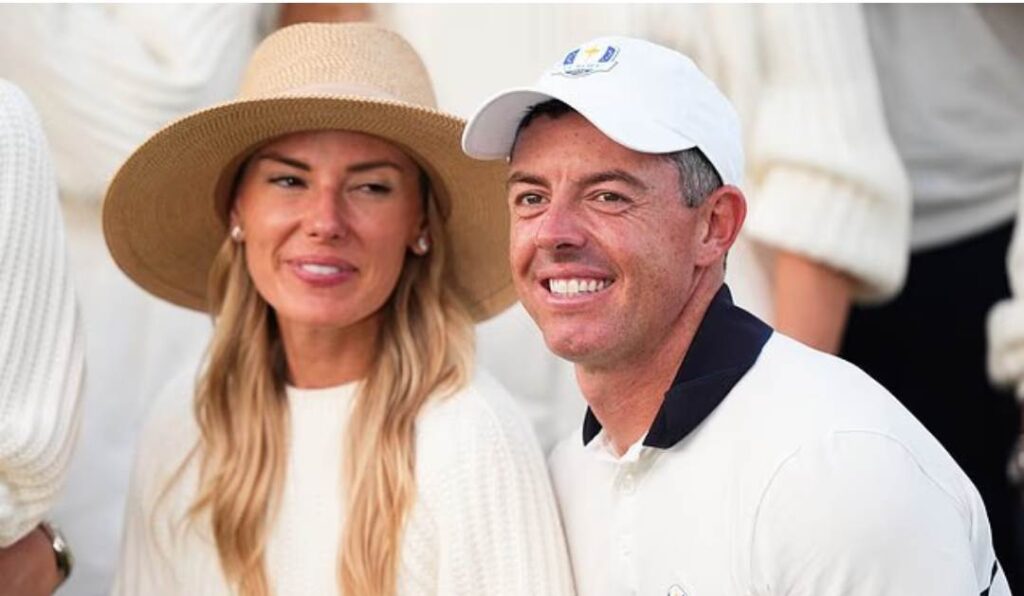
“Inside Rory McIlroy’s Three Grueling Days at the Ryder Cup: Abuse Hurled at Him and Wife Erica Stoll, His Explosive Words on the ‘Thugs,’ and the Truth About Who Was Really to Blame — Oliver Holt Reports”
The Ryder Cup is known for its passion, intensity, and national pride, but for Rory McIlroy, this year’s edition turned into something far darker and more personal. Over the course of three turbulent days, the Northern Irish golf star found himself the center of a storm not only on the course but off it — as abuse rained down on him, his wife Erica Stoll, and even his team.
Sports journalist Oliver Holt followed McIlroy closely throughout the event, documenting the escalating tensions that overshadowed the competition. What unfolded was a troubling reminder of the thin line between sporting passion and outright hostility.
From the moment he stepped onto the tee, McIlroy faced a barrage of jeers and heckles. Some fans, fueled by alcohol and the rowdy Ryder Cup atmosphere, crossed a line that went beyond good-natured rivalry. Holt reports that Erica Stoll, who stood quietly in support of her husband, was also targeted with cruel remarks — a sight that visibly rattled McIlroy, who is usually composed under pressure.
The abuse reached its peak during a heated exchange in the car park, when McIlroy, furious over the treatment of his wife, confronted a group of hecklers. According to Holt, McIlroy described the individuals as “thugs, not fans,” and made it clear that their behavior had no place in golf. The incident sparked widespread debate across the sporting world: where exactly is the line between passionate support and toxic aggression?
Behind the scenes, McIlroy opened up to Holt about how difficult it was to stay focused when personal boundaries were crossed. “It’s one thing to come after me,” he reportedly said, “but when it’s aimed at Erica, that’s when it goes too far.” His words underline the strain many athletes face — not just as competitors, but as people with families forced into the firing line.
As the Ryder Cup wore on, the question of who was to blame became unavoidable. Was it the rowdy fans who took things too far, or the organizers who failed to keep the atmosphere in check? Holt points out that while golf thrives on passion, tournament officials struggled to maintain a balance between spectacle and civility. Alcohol-fueled crowds were allowed to push limits, with security doing little to intervene until it was too late.
Yet despite the turmoil, McIlroy delivered a performance that spoke volumes about his resilience. Channeling his anger, he produced some of his best golf under extraordinary pressure, reminding everyone why he remains one of the sport’s greatest competitors. For Holt, the story of the week wasn’t just about points won or lost, but about the human cost of abuse in professional sport.
As the dust settles, McIlroy’s words serve as both a warning and a plea: passion should never turn into poison. For him and Erica, this Ryder Cup will be remembered less for its golf and more for the lesson it delivered about respect — a lesson the sport must heed if it wants to protect its players and its soul.