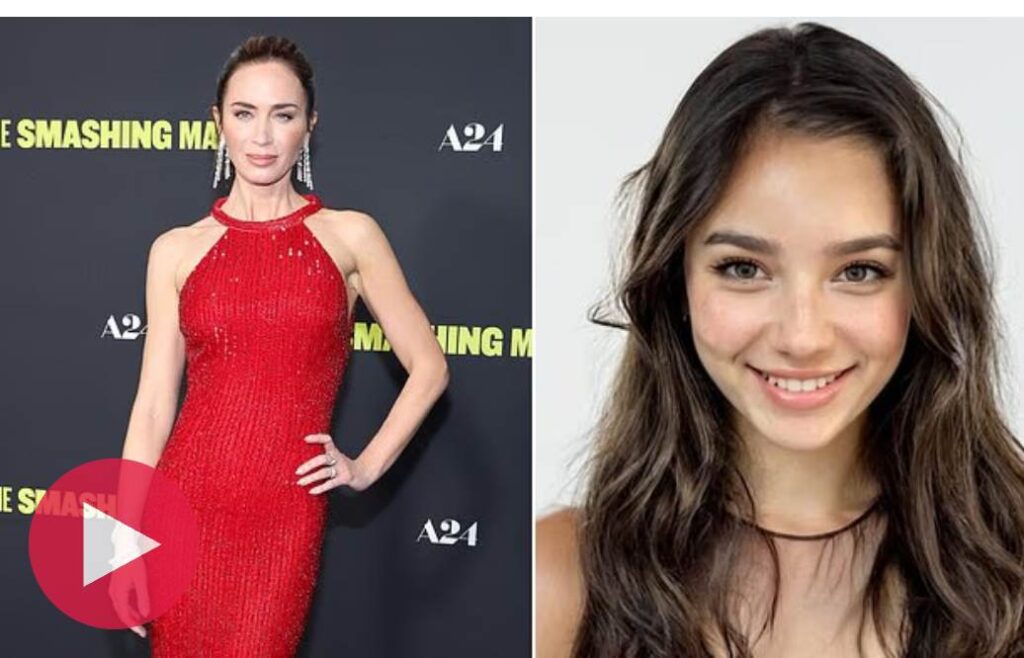
Emily Blunt Slams Rise of AI Actress Tilly Norwood as “Terrifying”: Hollywood Stars and Unions Warn of a Future Where Synthetic Performers Replace Humans
When images of Tilly Norwood, a lifelike AI-generated actress, were unveiled at the Zurich Summit, many in the film industry were left stunned. But it was actress Emily Blunt’s blunt reaction that cut through the noise. The Oppenheimer star branded the creation of Norwood “terrifying,” warning that Hollywood may be heading toward a future where flesh-and-blood performers are replaced by synthetic avatars built from algorithms and borrowed artistry.
Norwood, created by AI talent studio Xicoia under production company Particle6, has been designed with a full backstory, a carefully crafted look, and even a budding résumé—she recently appeared in a comedy sketch called AI Commissioner. Her creators describe her as the “first synthetic actress,” boasting that she could be the next Scarlett Johansson or Natalie Portman. But Blunt, like many of her peers, wasn’t impressed. “Good Lord, we’re screwed,” she reportedly said after being shown Norwood. “You can’t replace human connection. We already have Scarlett Johansson.”
The arrival of Norwood comes at a tense moment in Hollywood. The entertainment industry has only just emerged from a bitter strike in which SAG-AFTRA fought for protections against AI replication of actors’ likenesses. The union has now condemned Norwood, insisting that synthetic creations are not real actors and lack the lived experiences and emotional depth necessary to tell authentic stories. “What they’re calling an actress is nothing more than data dressed up as a face,” one union spokesperson declared.
Blunt’s unease reflects broader concerns across the industry. For decades, filmmakers have embraced visual effects, CGI, and performance capture, but those tools always depended on a real actor at the core. What makes Norwood different—and more controversial—is that she was generated entirely by AI. Her existence prompts a host of thorny questions: What does it mean to perform? Can an algorithm truly replicate human emotion? And if AI models are trained using footage, voices, or likenesses of real actors without their consent, do those actors deserve compensation?
Critics of synthetic performers also worry about the potential impact on jobs. With studios under pressure to cut costs, AI-generated actors could be used to fill background roles, commercials, or even starring parts, shrinking opportunities for human talent. At the same time, audiences may struggle with the uncanny valley—characters who look convincing on the surface but feel strangely hollow, leaving viewers emotionally disconnected.
Supporters, however, argue that AI performers could open up new creative horizons, allowing for storytelling unconstrained by human limitations. Particle6 has defended Tilly Norwood as an “artistic experiment” rather than a threat, suggesting that she will exist alongside human actors rather than replacing them.
Still, Blunt and many of her peers remain unconvinced. For them, the rise of AI talent is not just a technical novelty but a potential existential crisis for the craft of acting. As Norwood’s name trends and agencies reportedly circle with interest, Hollywood now faces a defining question: in the pursuit of innovation, how much of humanity is it willing to sacrifice?