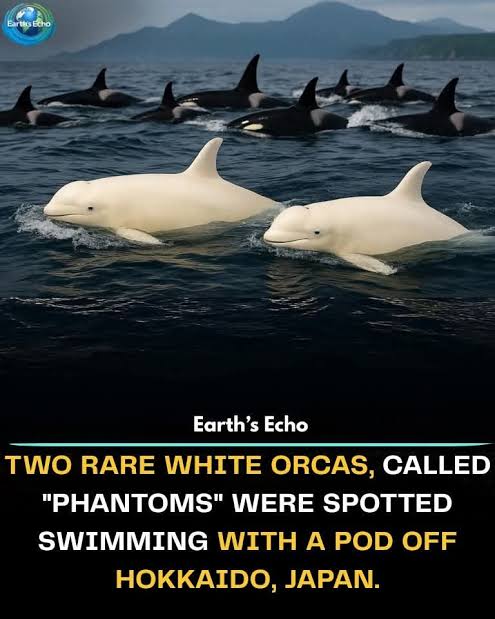
Ghosts of the Deep: Scientists Capture Rare Footage of Endangered Orca Pod Once Thought Lost”
SOUTHERN INDIAN OCEAN — In a stunning breakthrough for marine conservation, scientists have captured rare, high-quality footage of an endangered orca pod long believed to be one of the most elusive on Earth.
The discovery was made when a team of marine biologists aboard the SSS Bob Barker encountered a pod of 13 Type D orcas between the Crozet and Kerguelen archipelagos in the South Indian Ocean. This marks the first time this mysterious ecotype of killer whale has been filmed alive and in motion, offering an unprecedented glimpse into one of nature’s most secretive marine predators.
An Orca Unlike Any Other
Type D orcas stand apart from other killer whales by their rounded foreheads, tiny white eye patches, and distinctly bulbous heads. For decades, these differences sparked debate among scientists over whether they represented a separate species.
Genetic samples taken from a 1955 New Zealand museum specimen suggest that Type D orcas diverged from other killer whale lineages approximately 390,000 years ago — making them one of the oldest and rarest branches of the orca family tree.
A Discovery Against the Odds
The footage shows the orcas surfacing, swimming alongside the vessel, and displaying complex social behavior. These encounters were captured in remote subantarctic waters notorious for rough seas and frigid temperatures — regions so isolated that only a handful of verified sightings have been recorded in history.
> “Seeing them alive was like witnessing a ghost come to life,” said one researcher. “For years, we only had bones and blurry photos. Now, we have proof — they’re still out there.”
Hope for Conservation
The sighting offers a crucial lifeline for conservationists seeking to protect the dwindling population. The visual evidence will help scientists better understand the pod’s size, structure, and habitat, paving the way for new protection measures.
Marine experts warn, however, that the same isolation protecting the orcas may also make them vulnerable to climate change, shifting prey availability, and increasing human ocean activity.
Environmental organizations are now calling for an expansion of marine protected zones in subantarctic waters to safeguard the orcas’ habitat before it’s too late.
A Reminder from the Deep
The discovery underscores the vast mysteries that still linger beneath the world’s oceans — and how easily humanity can lose touch with even its most intelligent marine relatives.
> “They’ve survived centuries of whaling, ice, and isolation,” said a conservation biologist. “The least we can do now is make sure they survive us.”