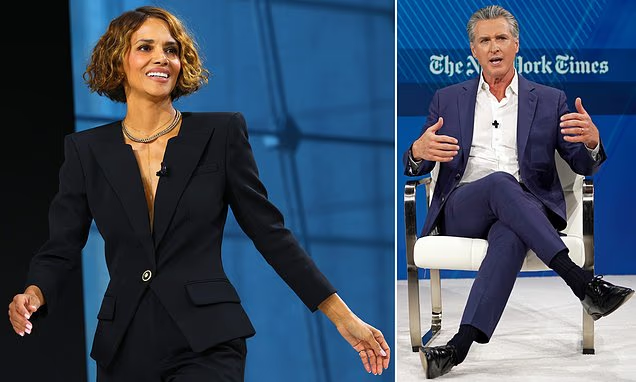
Gavin Newsom Caves on ‘Critical’ Women’s Health Measure After Halle Berry Humiliated Him at Star-Studded Event
California Governor Gavin Newsom has reversed course on a significant women’s health measure following a public rebuke from Oscar-winning actress Halle Berry at a high-profile, star-studded event. The controversy erupted at The New York Times’ DealBook Summit, where Berry directly criticized Newsom for vetoing the Menopause Care Equity Act (AB 432) — legislation designed to expand access to menopause-related healthcare services and improve coverage for women in midlife.
Berry’s remarks were unflinching. She described Newsom as “devaluing” women by repeatedly rejecting a bill that advocates have long called essential for women’s health, adding that he “shouldn’t be our next president.” The comments reportedly drew audible gasps from the audience, as Newsom was slated to appear onstage shortly afterward. The incident quickly went viral, prompting a wave of media coverage and social media discussions highlighting the growing frustration over midlife women’s healthcare access.
In response to Berry’s scathing critique, Newsom’s office issued a statement acknowledging the importance of the issue while defending previous vetoes, citing concerns that the bill could increase healthcare costs for working women and families. However, the governor signaled a willingness to revisit the legislation and incorporate key provisions into the upcoming 2026–27 state budget. This shift effectively amounts to a partial reversal, demonstrating that public pressure, particularly from a high-profile figure like Berry, can influence policy decisions.
The Menopause Care Equity Act aims to require insurance providers to cover evaluation and treatment options for perimenopause and menopause symptoms and to ensure that medical professionals receive training on these conditions. Supporters argue the legislation addresses long-standing gaps in healthcare for women, reducing disparities and ensuring midlife women are not overlooked in treatment decisions. Advocates have emphasized that menopause should be treated as a serious medical concern, not a peripheral issue, making the bill a critical step in addressing systemic inequities.
Public reaction to the summit moment was swift. Social media users applauded Berry for her courage in confronting a powerful politician in a public forum. Reddit threads and other online platforms buzzed with discussions of the importance of women’s health advocacy, with many expressing relief that the governor appeared to be reconsidering his stance. While some critics remain skeptical about how comprehensive the final legislation will be, others view this as a significant win for women’s health advocates, demonstrating that advocacy and public pressure can drive meaningful change.
This episode underscores a broader cultural shift in which women’s midlife health, particularly menopause and perimenopause care, is gaining recognition as a legitimate public-policy concern. Newsom’s willingness to adjust his position following Berry’s criticism suggests that vocal advocacy, even from celebrity figures, can have tangible effects on legislation. While the final form of the bill remains to be seen, Berry’s intervention has undeniably brought the issue to the forefront, ensuring that midlife women’s healthcare receives the attention it deserves.