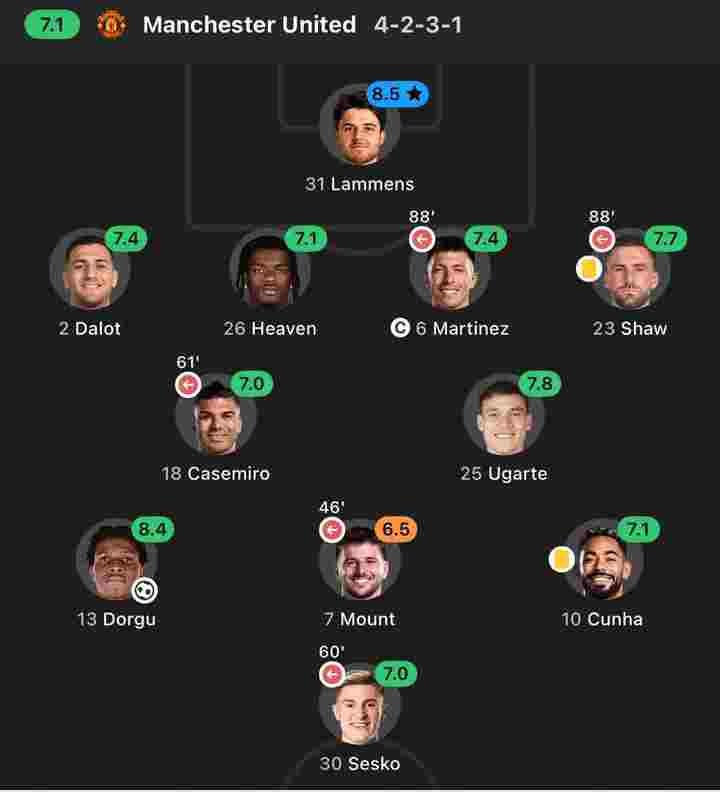
The return of the 4-2-3-1 formation at Old Trafford has stirred something deep among Manchester United supporters, and it’s easy to understand why.
For many fans, this system represents more than just a tactical setup — it symbolizes identity, balance, and a style of football that feels unmistakably “United.” Seeing it back on the pitch has brought a wave of nostalgia, optimism, and belief that the club is reconnecting with its roots.
Historically, the 4-2-3-1 has been one of the most effective formations used at Old Trafford in the modern era. It offers structure without rigidity, allowing United to dominate games while still playing at pace. The double pivot in midfield provides defensive security and control in possession, freeing the attacking players to express themselves. This balance has often been missing in recent seasons, making its return feel like a step in the right direction.
One of the biggest strengths of the 4-2-3-1 is how clearly defined the roles are. The two holding midfielders shield the defense and dictate tempo, reducing exposure at the back. Ahead of them, the attacking midfield trio thrives in pockets of space, creating overloads and stretching defenses. The lone striker benefits from consistent support, rather than becoming isolated, which has been a recurring problem in other systems.
At Old Trafford, this formation feeds directly into the atmosphere.
When United press high, move the ball quickly, and attack with width, the crowd responds. The 4-2-3-1 encourages exactly that kind of football — fast transitions, overlapping runs, and quick combinations around the box. It turns possession into pressure and pressure into momentum, something fans have been desperate to see restored.
The system also suits the current squad far better than many alternatives. Creative midfielders get the freedom to influence games centrally, wingers can stay wide and attack defenders one-on-one, and fullbacks are supported rather than exposed. Importantly, it reduces the need for players to perform unnatural roles, allowing them to focus on their strengths instead of compensating for tactical imbalance.
Emotionally, the return of this formation feels like a reconnection with happier times. United supporters associate it with control, confidence, and authority at home — traits that once made Old Trafford a fortress. Even when results are not perfect, the style of play matters, and the 4-2-3-1 offers a platform for entertaining, proactive football.
Of course, a formation alone does not guarantee success. Execution, discipline, and consistency are still required to turn promise into results. But the early signs suggest a clearer plan, a more stable structure, and a squad that looks more comfortable within its roles.
For fans, that clarity brings hope. Seeing the 4-2-3-1 back at Old Trafford isn’t just about tactics — it’s about belief returning. It’s about watching a team that looks organized, ambitious, and capable of growing. If nurtured properly, this system could be the foundation for sustained progress, reminding everyone why football at Old Trafford once felt so special — and why it can feel that way again. ❤️⚽