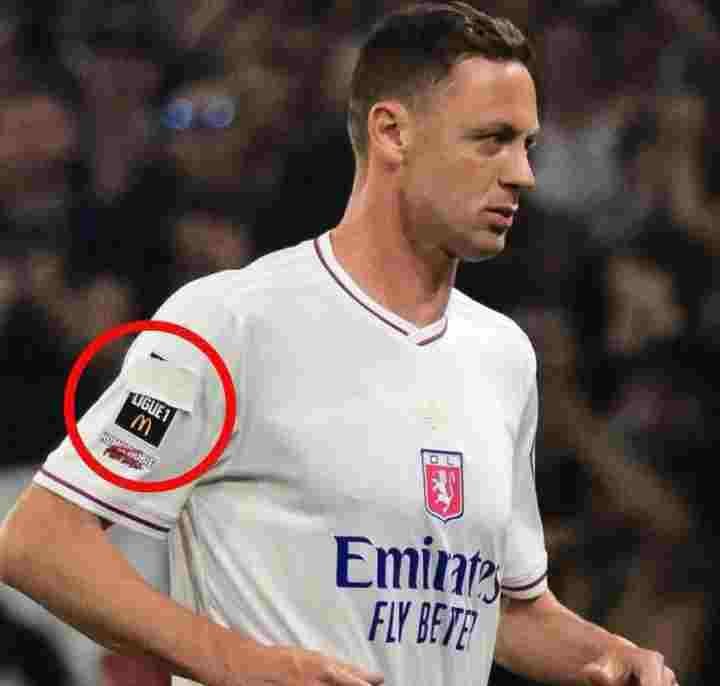
Former Manchester United midfielder Nemanja Matić has found himself at the centre of controversy following disciplinary action taken against him in France — a situation that ultimately ended without him serving a suspension due to his transfer abroad.
While playing in Ligue 1, Matić was handed a ban after taping over an LGBTQ+ anti-homophobia logo on his match shirt. The badge was part of the league’s annual campaign aimed at promoting inclusivity and combating discrimination in football. Ligue 1 authorities deemed Matić’s actions a breach of league regulations and issued a suspension as a result.
The decision quickly drew attention across European football. Ligue 1’s anti-homophobia initiative has been a focal point in recent seasons, with players expected to visibly support the campaign during designated matchdays. Several incidents in the past have already sparked debate around personal beliefs, professional responsibilities, and football’s role in social messaging, making Matić’s case particularly high-profile.
However, while the ban was officially confirmed, it was never actually served.
Before the suspension could be enforced, Matić’s situation at his French club came to an end. The veteran midfielder left Ligue 1 shortly afterwards and completed a move to Serie A side Sassuolo, effectively removing himself from French football’s jurisdiction. As a result, the suspension — which was tied to domestic competition in France — became redundant once he was no longer registered in the league.
This sequence of events has prompted discussion about the practical impact of disciplinary bans when players change leagues. Because football suspensions are not always transferable across countries unless governed by FIFA-wide regulations, Matić’s move meant that he continued his career in Italy without missing competitive matches.
For Sassuolo, the signing was viewed primarily through a footballing lens. Matić brings vast experience at the highest level, having played for Manchester United, Chelsea, Roma, and international competitions with Serbia.
His leadership and positional discipline were key factors behind the club’s decision to bring him in, particularly as they looked to stabilise their midfield.
The episode, however, has reignited wider conversations around consistency in enforcement, player accountability, and symbolic gestures in football. Critics argue that situations like this weaken the authority of league-led campaigns, while others point out the complexity of balancing personal convictions with professional obligations in a global sport.
From Matić’s perspective, the move to Italy represents a fresh chapter late in his career. From Ligue 1’s standpoint, the case highlights a loophole in disciplinary processes when players exit a league before sanctions are applied.
Ultimately, the headlines reflect a situation where discipline was issued but never enacted, leaving football authorities facing renewed scrutiny over how such matters are handled. While the controversy may now fade as Matić continues his career in Serie A, the broader questions surrounding enforcement and messaging in football are unlikely to disappear anytime soon.