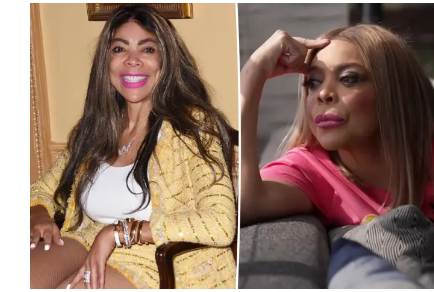
“Wendy Williams Ordered to Testify in Lifetime Documentary Battle — Judge Says Dementia Diagnosis Won’t Stop Explosive Deposition”
Wendy Williams’ legal saga has taken a dramatic turn. Despite her highly publicized dementia diagnosis, the former daytime talk show queen has been ordered to sit for a sworn deposition in the ongoing legal battle surrounding Lifetime’s controversial documentary Where Is Wendy Williams?
A New York judge ruled this week that Williams, 61, must testify in a limited, preemptive deposition—known legally as a de bene esse deposition—by November 4, 2025. The extraordinary ruling comes months after Williams’ guardian, Sabrina Morrissey, sued A&E Television Networks, alleging that the two-part Lifetime documentary was filmed without proper consent and exploited the star’s fragile health.
A Battle Over Capacity and Consent
Williams was diagnosed in 2023 with primary progressive aphasia and frontotemporal dementia (FTD), conditions that severely affect communication, cognition, and memory. While doctors confirm the diagnosis, Williams herself has publicly denied being incapacitated, telling fans that she remains “sharp” and “in control” of her decisions.
That tension—between medical diagnosis and personal assertion—has now become the centerpiece of this lawsuit. Morrissey argues that Williams lacked the capacity to meaningfully consent to the documentary, while A&E maintains the project was filmed with proper agreements.
The Judge’s Balancing Act
In his ruling, the judge acknowledged Williams’ health challenges but emphasized that a medical diagnosis does not automatically render someone incompetent to testify. Instead, it will be up to a jury to determine the credibility and weight of her testimony.
To accommodate her condition, the deposition must be conducted remotely, with strict limits: no more than three hours a day, across a maximum of three days. Only a small group of attorneys will be allowed to participate, and frequent breaks will be built in to avoid overwhelming the former host.
Why It Matters
The deposition could prove pivotal for both sides. For A&E, it offers a chance to demonstrate that Williams understood and agreed to the project. For Morrissey and Williams’ legal team, it’s an opportunity to underscore the vulnerabilities that may have been ignored during production.
Beyond the courtroom, the ruling raises broader ethical questions: How should the media handle stories involving celebrities with cognitive impairments? Where is the line between documentary storytelling and exploitation?
Wendy’s Legacy on the Line
Once dubbed the “Queen of All Media,” Williams built her empire on bold commentary, fearless interviews, and her signature catchphrase, “How you doin’?” Now, her most public fight is not on a talk show stage but in a courtroom, where her ability to testify could redefine how the public sees her final chapter.
If Williams can deliver a deposition that convinces a jury she was aware and capable, it may bolster her fight against full guardianship. But if her testimony shows cognitive decline, it could strengthen arguments that she has been taken advantage of—and reinforce the case for tighter legal protection.
Either way, the coming weeks promise a deeply emotional showdown. For Wendy Williams, whose life has played out in the spotlight for decades, this may be the most personal—and consequential—performance of her career.