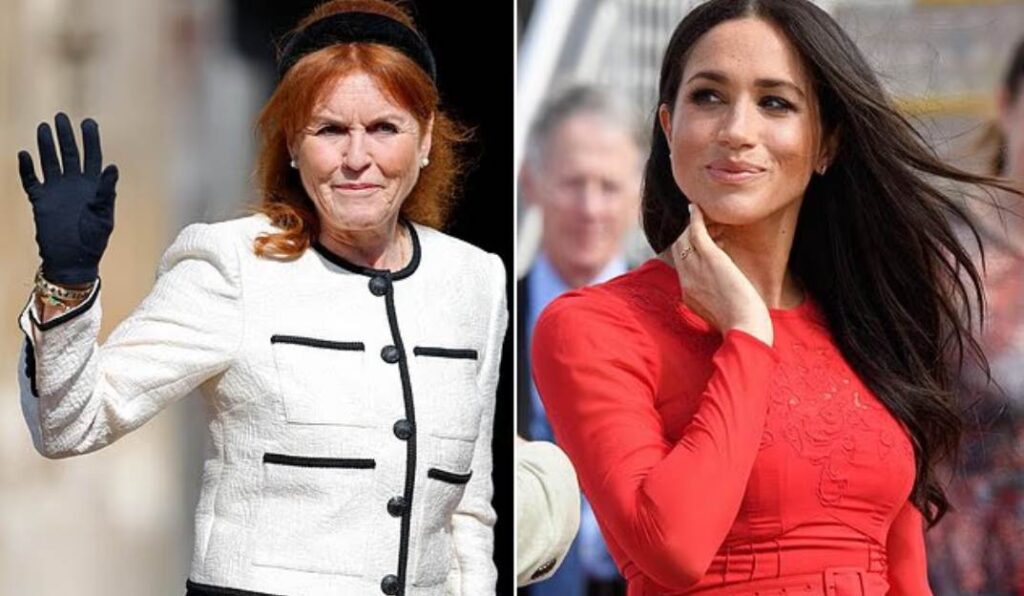
“SARAH VINE: The Uncanny Parallels Between Sarah Ferguson and Meghan Markle—And Why Fergie’s Royal Downfall Should Be a Serious Red Flag for the Sussexes”
In a thought-provoking new piece, columnist Sarah Vine has drawn striking comparisons between Sarah Ferguson, Duchess of York, and Meghan Markle, Duchess of Sussex. Both women, she argues, share similar trajectories within the royal family—and the lessons from Fergie’s downfall could hold critical warnings for Prince Harry and Meghan’s future.
Ferguson, affectionately known as “Fergie,” was once hailed as a breath of fresh air when she joined the royal fold in the 1980s through her marriage to Prince Andrew. Her warmth, charisma, and relatability endeared her to the public. However, her relationship with the press soured after scandals, financial troubles, and public missteps, ultimately casting her outside the royal inner circle.
Sarah Vine suggests that Meghan’s experience mirrors many of the same highs and lows. Like Ferguson, Meghan initially captivated the public when she married into the monarchy in 2018. She was praised for her glamour, modernity, and ability to connect with younger audiences. But soon, tensions with the institution, media scrutiny, and personal controversies shifted the narrative, leaving Meghan and Prince Harry to step back from royal duties and carve out a new life in California.
Vine points out that both women struggled with the rigid expectations of palace life and the constant intrusion of the media. “The similarities are almost eerie,” she writes, noting how both Fergie and Meghan went from being hailed as royal assets to being painted as problematic outsiders.
The key warning, according to Vine, is in what came next for Sarah Ferguson. After her separation and eventual divorce from Prince Andrew, Fergie’s attempts to reinvent herself often fell flat. She became a target for ridicule and financial mismanagement, her reputation forever overshadowed by her early scandals. “The danger for Meghan,” Vine cautions, “is that she risks repeating history—believing she can outsmart the establishment, only to find herself marginalized, mocked, and left vulnerable.”
The Sussexes’ high-profile projects, including their Netflix and Spotify deals, book releases, and speaking engagements, have brought both immense opportunities and heavy scrutiny. Vine suggests that without careful navigation, Meghan could face a similar trajectory as Fergie—struggling to maintain long-term credibility and battling relentless media narratives.
Still, there are key differences. Meghan and Harry have far greater global reach and resources than Ferguson ever did, bolstered by their American base and modern media savvy. Yet, as Vine emphasizes, fame can be fleeting, and public opinion volatile. If lessons from Fergie’s downfall are not heeded, the Sussexes could find themselves on a similarly rocky path.
Ultimately, Vine’s commentary serves as a cautionary tale, urging the Duke and Duchess of Sussex to learn from royal history rather than repeat it. For Meghan in particular, the story of Sarah Ferguson may not just be a curious royal parallel—it could be a glimpse into a possible future if she is not careful.