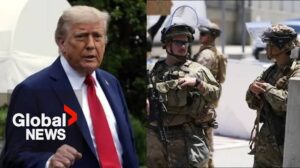
The Law Bends — Trump Doesn’t: Inside the President’s War on Constitutional Limits
A fresh wave of legal and political debate is engulfing Washington as analysts and constitutional scholars examine the expanding scope of President Donald Trump’s executive powers, following his recent move to deploy federal troops to Chicago just days after a court blocked his Portland order.
The analysis of the presidency’s powers is ongoing, with experts suggesting that Trump’s decisions reflect a pattern of testing the outer limits of presidential authority — particularly in areas involving domestic security and state autonomy.
“President Trump is not necessarily breaking the law, but he’s operating at the edges of it,” said Dr. Elaine Patterson, a professor of constitutional law at Georgetown University. “Every presidency defines its own boundaries — Trump’s just doing it more aggressively than most.”
Critics argue that Trump’s willingness to override judicial and state resistance signals an executive overreach that could erode constitutional checks and balances. The Posse Comitatus Act, which restricts military involvement in civilian law enforcement, remains at the center of this tension.
Supporters, however, claim that Trump is asserting strength where others have shown weakness. “He’s defending the country against chaos when local officials fail to act,” said former White House aide Mark Daniels, framing the move as a decisive response to urban disorder and weak governance.
Legal experts predict the confrontation between state governments and the federal executive could escalate into a landmark constitutional dispute, reshaping the balance of power for future administrations.
As hearings, lawsuits, and protests unfold, the question dominating Washington remains: How far can a president go before power becomes defiance?