Blink-and-You’ll-Miss-It Moment in Meghan’s Christmas Special Exposes the Truth, Says Annabel Fenwick Elliott
Meghan Markle’s latest Christmas special has sparked widespread discussion, but not all of it is praise. Critic Annabel Fenwick Elliott has described the production as a “sad, self-indulgent, cringy wash of beige,” highlighting what she sees as the moment it went “diabolically wrong.” According to Elliott, the special contains fleeting moments that reveal far more about Meghan’s intentions and approach than the glossy presentation initially suggests.
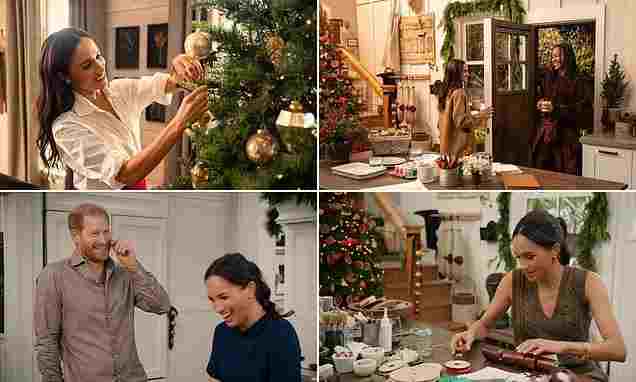
The Christmas special, which aired over the holiday season, was designed to showcase festive cheer, family values, and charitable endeavors. Meghan’s narration and on-camera appearances were meant to convey warmth and inclusivity, blending holiday traditions with a personal touch. Yet, according to Elliott, subtle cues in framing, dialogue, and editing betray a tone of self-indulgence that undercuts the intended charm.
Elliott points to a “blink-and-you’ll-miss-it” moment as particularly telling. In this fleeting instance, Meghan’s body language and brief glance away from the camera, combined with a carefully staged backdrop, seemingly reveal a disconnect between the polished presentation and the underlying reality. While viewers may miss it on first watch, Elliott argues it encapsulates the core flaw of the special: an overemphasis on image at the expense of authenticity.
The reviewer also criticizes the aesthetic choices of the production. “The overwhelming beige palette,” Elliott notes, “renders the special visually monotonous and emotionally flat. Instead of celebrating the vibrancy of the season, it becomes a pale, almost ghostly reflection of the intended warmth.” This design choice, coupled with scripted interactions and tightly curated sequences, contributes to what Elliott describes as “a self-contained echo chamber of Meghan’s persona.”
Elliott further contends that the special’s narrative structure falters when attempting to balance personal storytelling with broader cultural or charitable messages. The sequences that aim to showcase philanthropy or engage with communities often feel staged, according to the critic, diminishing their emotional impact. “When the spectacle outweighs substance, the viewer is left feeling distanced, rather than connected,” she writes.
Despite these critiques, some viewers have praised aspects of the production, particularly its cinematography and subtle holiday-themed set design. Fans appreciated the moments of genuine interaction with staff, volunteers, and family members that broke through the otherwise polished veneer. However, Elliott’s overall assessment remains harsh, framing the special as “a missed opportunity to offer an intimate, relatable perspective on Meghan’s life and values.”
Ultimately, the Christmas special appears to have divided audiences. While some celebrated it as a festive celebration and glimpse into Meghan’s life, Elliott’s analysis emphasizes that even small, fleeting moments can expose fundamental flaws in presentation and intent. For critics like her, the production serves as a reminder that authenticity and connection are more compelling than perfection and polish — lessons that are easy to overlook when a project is consumed purely for its spectacles