Amorim’s Night of Chaos: Injuries, Panic Changes, and a Test of Authority
Ruben Amorim’s night threatened to unravel long before the final whistle, and the headlines reflected a manager firefighting rather than fine-tuning.
What began as a carefully planned contest quickly descended into damage control, with Manchester United stretched by injuries, forced substitutions, and mounting uncertainty. By the closing stages, the story was no longer about tactics or dominance, but survival.
The first blow arrived at half-time. Mason Mount, handed responsibility in midfield, was forced off through injury, instantly disrupting Amorim’s structure. Any rhythm United had built vanished with him. The change was not just physical but psychological — a reminder that this was going to be one of those nights where control slips away piece by piece.
Then came the decision that raised eyebrows. Casemiro was withdrawn, and the timing told its own story. This did not feel like a purely tactical move. It felt protective. Amorim appeared unwilling to risk losing another key player, particularly one with Casemiro’s mileage and importance.
In the context of an already growing injury list, the substitution looked cautious, perhaps even fearful — but understandable.
The situation worsened as the clock ticked down.
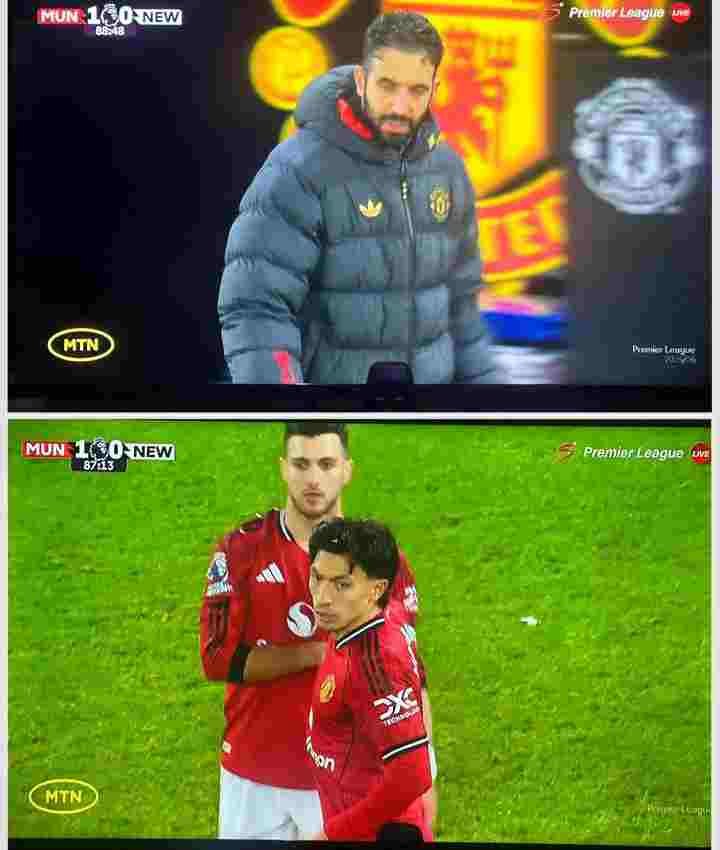
Lisandro Martínez and Luke Shaw both left the pitch with more than eight minutes still to play, stripping United of two defensive pillars at the most dangerous moment of the match. Leadership drained from the back line, and cohesion disappeared with it.
The defensive reshuffle left United vulnerable, improvised, and hanging on.
From the stands and across social media, the narrative shifted rapidly. Amorim’s changes were labelled “panic” substitutions — reactive rather than proactive.
But the reality was more complex. With limited options and players dropping around him, the manager was choosing between bad and worse. This was no longer about perfect execution; it was about keeping eleven players standing.
The headlines the next morning told a story of chaos: Injury-hit United cling on, Amorim forced into late reshuffle, Survival over style. Yet buried within that narrative was a different question — one that could define the verdict on Amorim’s night.
If Manchester United manage to find a way through this, if they somehow secure all three points despite the disruption, then the tone changes completely. What looks like panic becomes pragmatism. What feels like fear becomes foresight. Managing risk, protecting players, and adapting on the fly are skills often overlooked until a manager fails to do them.
Victory under these circumstances would not be glamorous. It would not signal dominance or long-term solutions. But it would speak to authority under pressure — a manager making uncomfortable calls in real time, prioritising the bigger picture over short-term bravado.
Ruben Amorim did not get the game he planned. He got the game he had to endure. And if United emerge from this night with a result intact, the headlines may yet shift from chaos to credit — and from panic to plaudits.