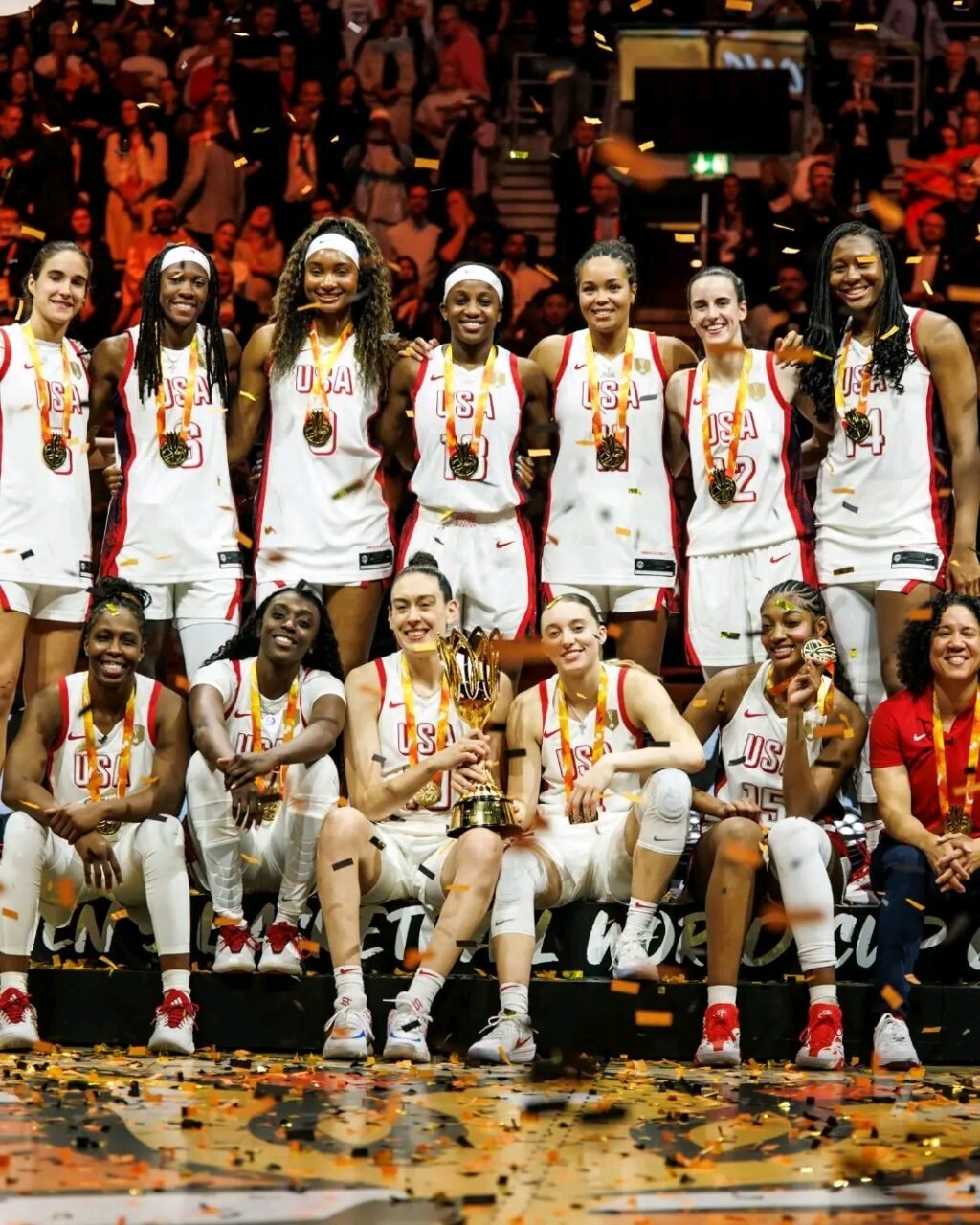
Whenever the global basketball community gathers for the FIBA World Cup, the expectation remains static: gold or failure. As the birthplace of the sport and home to the world’s premier domestic league, the United States is routinely expected to dominate. When Team USA falls short, sports media dissects the loss as a major upset.
Three structural reasons explain why Team USA was expected to win the tournament—and why their vulnerability remains a repeating story in international competition.
1. Unmatched Individual Talent and Depth
The most immediate argument for Team USA’s expected victory is the sheer concentration of elite individual talent. While top international contenders like France, Serbia, Canada, or Germany field world-class NBA superstars at the top of their rosters, no other nation matches the 12-man depth of the American squad.
┌─────────────────────────────────────────────────────────────┐
│                    TALENT SPECTRUM                          │
├──────────────────────────────┬──────────────────────────────┤
│ Global Rivals                │ Team USA                     │
├──────────────────────────────┼──────────────────────────────┤
│ 1-3 Elite Superstars         │ 12 NBA Starters / All-Stars  │
│ Steep drop-off on bench      │ Infinite depth rotatable     │
│ High reliance on key starters│ Athletic superiority at 1-5  │
└──────────────────────────────┴──────────────────────────────┘
The U.S. roster consists entirely of high-level NBA starters, All-Stars, and elite sub-25 talent whose combination of length, speed, and shot-creation capacity exceeds any opponent’s rotation. On paper, the U.S. holds an advantage at nearly every matchup:
- Shot Creation: American rosters feature multiple perimeter creators capable of scoring off the dribble when defensive schemes break down.
- Athletic Mismatches: The open-court speed and transition scoring of U.S. guards and wings routinely force opponents into costly turnovers.
- Rotational Pressure: While opposing nations face significant performance drops when their bench unit enters, Team USA can maintain high pace and defensive pressure across all 40 minutes.
Because raw skill and athletic advantage resolve many standard game scenarios, analysts overwhelmingly favor the U.S. entering any international tournament.
2. Modern FIBA Adaptation & Elite Coaching
Historically, U.S. failures were attributed to bringing isolation-heavy rosters unsuited for the European style of play. However, modern Team USA construction explicitly addresses the nuances of the FIBA rulebook.
The program no longer relies purely on athletic wing play; selection committees deliberately target specific tactical profiles designed for international competition:
- 3-and-D Wing Versatility: Prioritizing multi-positional defenders who space the floor to counter clogged FIBA paint defense.
- Playmaking Bigs: Incorporating frontcourt players who can facilitate out of the short roll and defend high-pick-and-roll schemes.
- Tactical Preparation: Led by top NBA championship coaches and supported by extensive analytics teams, the U.S. bench possesses detailed scouting reports tailored to FIBA tendencies, zone defenses, and physical officiating.
With a coaching staff equipped to neutralize foreign tactical advantages and a roster built to shoot over zone defenses, the expectation was that Team USA had eliminated its traditional strategic blind spots.
3. The Historical Standard and Resource Infrastructure
Beyond current optics, Team USA carries the weight of historical dominance. USA Basketball operates with unequaled logistical and financial backing, providing players with elite training camps, medical support, and preparation environments designed to replicate high-stakes playoff basketball.
| Program Advantage | Impact on Tournament Expectations |
|---|---|
| Gold Medal History | Cultural expectation of victory creates psychological leverage over opponents. |
| Elite Logistics | World-class sports science, recovery tech, and travel support minimize fatigue. |
| Select Team Competition | Iron-sharpens-iron scrimmages against top young NBA prospects prior to departure. |
When a program combines world-class resources with a legacy of gold medals, sportsbooks and commentators treat any outcome other than a tournament championship as an anomaly.
The Reality of International Competition
Despite these clear advantages, international basketball has fundamentally shifted. FIBA games are 40 minutes rather than 48, feature no defensive three-second violations, and permit far more physical contact.
Opposing national teams often boast years of roster continuity, shared tactical familiarity, and defined roles that U.S. squads—built quickly over summer training camps—struggle to replicate on short notice. While Team USA enters every FIBA World Cup with the structural justification to win, shrinking global talent gaps mean that reliance on pure depth is no longer a guaranteed strategy.