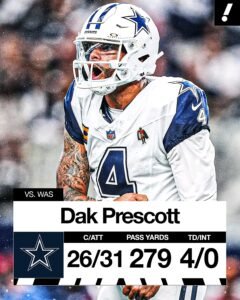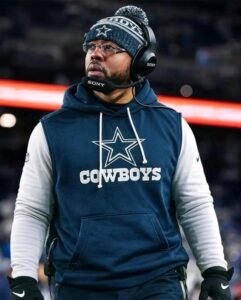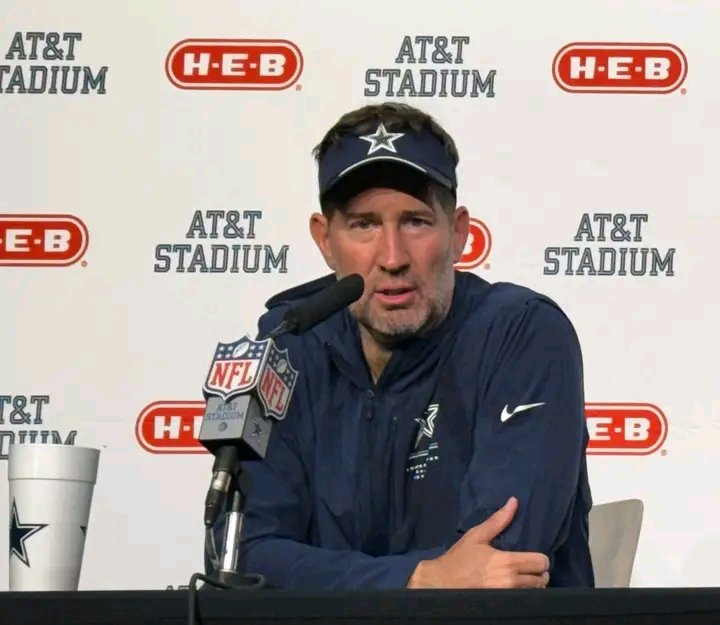
The Dallas Cowboys’ recent performance against the Washington Commanders and their dynamic quarterback, Jayden Daniels, has provided a clear blueprint of where the team stands early in the 2026 NFL season. Following the matchup, Cowboys offensive coordinator Brian Schottenheimer offered a candid assessment of the game, focusing heavily on how Dallas’ defense managed the unique threats presented by Washington’s signal-callers. Schottenheimer’s evaluation struck a careful balance between praising the defensive unit’s fundamental growth and acknowledging the glaring execution gaps that allowed the game to slip away.Progress in Communication and Pass RushSchottenheimer’s primary takeaway was an improvement in the defense’s baseline operations, particularly in communication. In the NFL, defensive breakdowns often stem from pre-snap confusion or poor adjustments to offensive shifts. According to Schottenheimer, the pre-snap and in-game communication was noticeably sharper. This organizational cohesion translated into a highly disruptive, albeit statistically quiet, pass rush.While the Cowboys’ defensive box score ended with an alarming zero in the sack column, Schottenheimer pointed out that traditional statistics failed to capture the full story. Both rookie sensation Jayden Daniels and veteran backup Marcus Mariota were consistently forced “off the spot.” The Dallas defensive line successfully collapsed pockets and disrupted timing, forcing the quarterbacks to improvise. In modern football, creating consistent pressure numbers and forcing early throws is often just as valuable as capturing a sack, and Schottenheimer felt vindicated by the film in that regard.The Jayden Daniels FactorHowever, disrupting a quarterback like Jayden Daniels carries inherent risks. The moment a defender moves a dual-threat quarterback off his designated spot, the play transforms from a structured pass into a chaotic, off-script scramble. Schottenheimer freely admitted that Dallas “did a poor job of containing Jayden.”Instead of throwing under duress, Daniels leveraged the vacated lanes created by the aggressive Cowboys pass rush to pick up massive chunks of yardage on the ground. Schottenheimer noted that “that’s really where the rush yards got away.” Rather than structural breakdowns in the traditional run-defense scheme, it was Daniels’ elite escapability and elite athleticism that punished Dallas. Schottenheimer gave credit where it was due, noting that Daniels “does that to a lot of people,” acknowledging that containing a talent of his caliber requires a level of discipline the Cowboys have yet to perfect.Structural Areas for ImprovementBeyond the containment breakdowns, Schottenheimer highlighted third-down efficiency as a critical area needing immediate attention. Failing to get off the field on third down wears down a defense and robs the offense of precious possessions. When a pass rush generates pressure but fails to secure the stop on third down, it deflates a team’s momentum.Schottenheimer’s concluding remarks served as a grounding reality check for the entire roster. By stating, “We certainly have not arrived. We got a lot of work to do,” he sent a clear message that moral victories or “good stretches” of tape are insufficient for a franchise with championship aspirations. The Cowboys have established a foundation of aggressive pass-rushing and clean communication, but until they pair that aggression with lane discipline and situational execution, they remain a work in progress.Would you like to analyze the specific defensive stats from this game, or look into Brian Schottenheimer’s thoughts on the Cowboys’ offense from the same week?