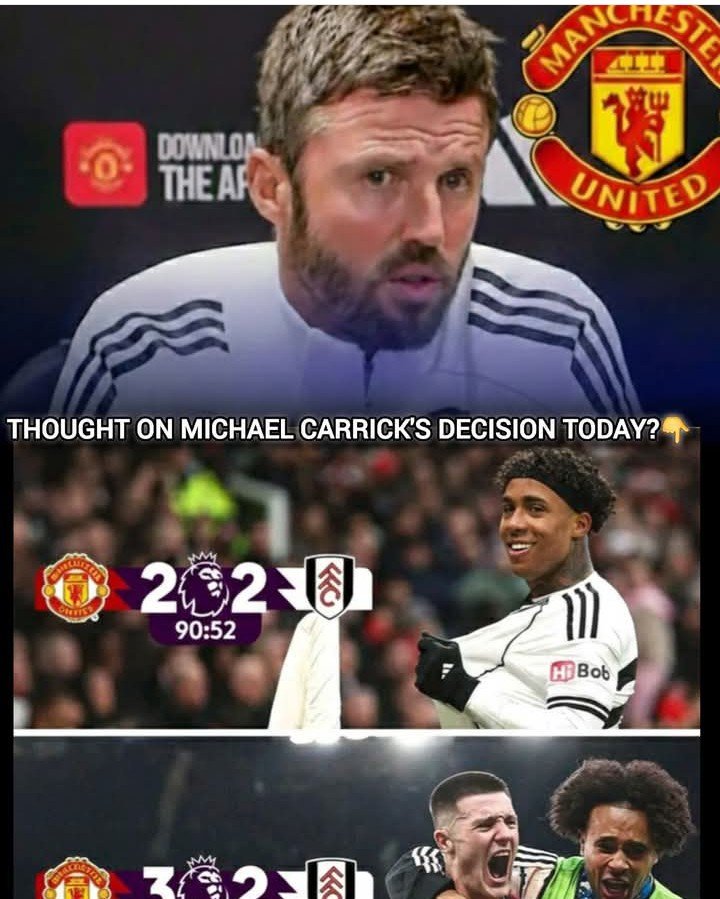
Michael Carrick’s Risky Call: Casemiro Substitution Sparks Debate
Michael Carrick’s decision today drew plenty of attention — and for good reason. While Manchester United secured an unbelievable win, pushing them into the top four of the Premier League standings, the substitution of Casemiro mid-game raised eyebrows among fans and pundits alike. Was it tactical genius, or a risky gamble? Let’s break it down.
First, credit where it’s due: United delivered a stunning performance. Their cohesion, attacking intent, and resilience were all on display, and the result puts them firmly in the top-four conversation. Michael Carrick’s management has clearly revitalized the squad, and the team continues to ride that momentum.
The point of contention, however, revolves around Casemiro’s substitution. Casemiro, as many fans and analysts will attest, is the heartbeat of United’s midfield.
His ability to dominate Kobbie Mainoo’s runs, control transitions, and dictate tempo makes him effectively “untouchable” in many eyes. Removing him, especially at a critical moment, appeared to hand Fulham the opportunity to press higher and capitalize on gaps — which they nearly did, equalizing with two goals.
Some believe Carrick’s decision was a gamble. Casemiro had received a yellow card earlier in the match, which automatically restricts his defensive aggression.
In this sense, substituting him could be seen as a preventive measure to avoid potential fouls or a sending-off, safeguarding United’s midfield balance. But the risk was clear: his replacement would need to cover massive defensive and transitional responsibilities, and not every player can replicate Casemiro’s presence.
Lisandro Martinez, often cited as a versatile cover, was expected to fill some of the gaps left behind.
However, he doesn’t provide the same midfield control or tactical dominance that Casemiro offers. Meanwhile, Manuel Ugarte, another option, has been scrutinized in previous games for sometimes destabilizing midfield structure when brought on. This contrast intensified the debate over whether the substitution was wise or merely necessary given the risk of yellow-card accumulation.
On the attacking side, the inclusion of Benjamin Šeško was widely praised. Fans applauded the decision, noting that Sesko’s presence on the field provides an immediate advantage for crosses and finishing opportunities — the very edge United needed to capitalize on their chances. Many supporters now argue that Sesko deserves regular starts to maximize United’s offensive potential.
Ultimately, this moment encapsulates the challenge of in-game management at the elite level. Carrick had to weigh the defensive risks of keeping Casemiro on the pitch against the offensive need to exploit Fulham’s weaknesses.
While opinions differ, the outcome — a win that cemented United in the top four — may justify the decision in hindsight.
What this situation highlights is the fine line managers must tread between risk and reward, particularly when it comes to midfield control. Casemiro’s influence is undeniable, and any move involving him is instantly scrutinized. Yet, Carrick’s ability to make such bold choices and still guide United to victory underlines his growing confidence and strategic acumen.
In conclusion, while the substitution sparked debate and could have backfired, the team’s resilience and Sesko’s impact ensured that Manchester United secured a vital victory. Carrick’s decision will continue to be analyzed, but for now, the result speaks for itself.