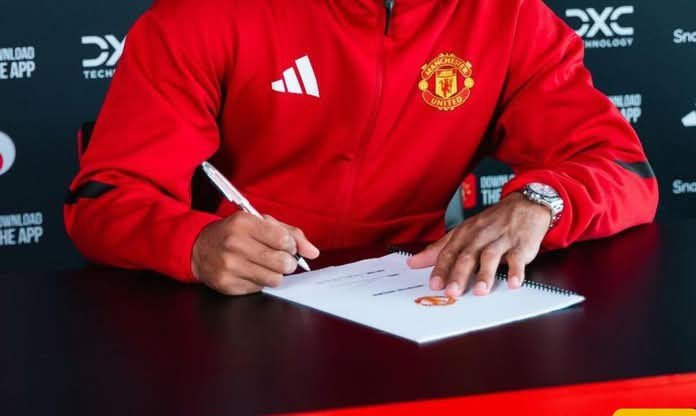
🚨 Man United and Man City can still seal transfers after the deadline using deal sheet rule.
The transfer deadline may have passed, but it doesn’t necessarily mean business is completely shut — and that’s where the deal sheet rule comes into play. Manchester United and Manchester City, like all Premier League clubs, can still finalise transfers after the deadline under specific conditions, and it’s a mechanism that often causes confusion among fans.
So, what exactly is the deal sheet rule?
In simple terms, clubs are allowed a short extension beyond the official deadline — usually two hours — if they can prove that a deal was substantially agreed before the window closed. To trigger this extension, clubs must submit a deal sheet to the Premier League before the deadline, outlining key details of the transfer and explaining why additional time is required.
This rule exists to account for the practical realities of transfers. Complex deals often involve international paperwork, third-party approvals, player registrations, and last-minute legal checks. Rather than killing a move due to minor administrative delays, the deal sheet provides breathing room — but only if the club acts before time expires.
For Manchester United and Manchester City, this matters because both clubs are frequently involved in high-value, late-window negotiations. Whether it’s a last-minute loan, a surprise permanent signing, or a replacement brought in after an outgoing transfer, the deal sheet rule keeps the door slightly ajar — but not wide open.
Crucially, this is not a loophole for starting new negotiations after the deadline. The transfer must already be agreed in principle. Clubs cannot suddenly identify a target at 11:01pm and use a deal sheet as cover. The Premier League reviews submissions carefully, and any attempt to abuse the system would be rejected.
Historically, this rule has been used successfully by multiple clubs, including Manchester United themselves. It’s rare, but not unusual, and when it happens it often leads to confusion as fans assume the window has fully closed. In reality, the paperwork window is still technically alive.
From a strategic perspective, clubs like United and City often prepare deal sheets as insurance. Even if they hope to complete everything in time, having the paperwork ready protects them against unforeseen delays — a failed medical slot, late international clearance, or agents finalising terms at the last minute.
For fans tracking transfers, the key takeaway is this: silence after the deadline does not always mean a deal is dead. If credible reports emerge that a deal sheet was submitted, there is still a genuine chance of confirmation arriving later.
That said, the rule is tightly controlled and rarely used for blockbuster signings. It’s far more common in loans, replacements, or deals dependent on cascading moves elsewhere in the market.
So while the deadline closes the door, the deal sheet rule leaves it slightly ajar — and for clubs like Manchester United and Manchester City, that can be the difference between a deal collapsing and getting it over the line.