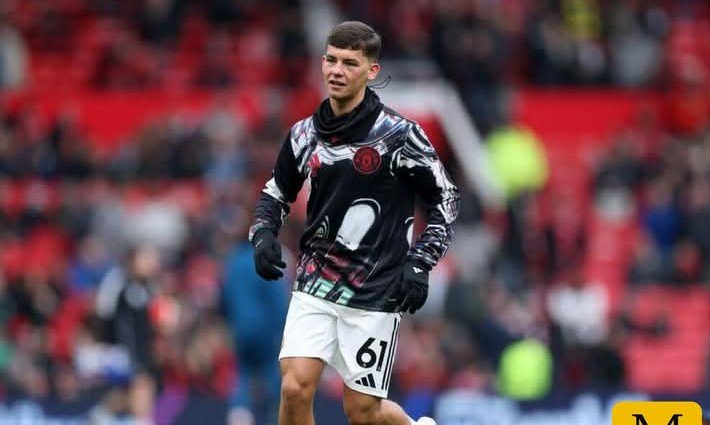
Why Shea Lacey and Chido Obi have not been named in Man United 23-man squad
Manchester United’s announcement of their 23-man squad inevitably sparked debate among supporters, with particular attention drawn to the absence of two highly rated young attackers: Shea Lacey and Chido Obi.
Both players have generated excitement at academy level and have been tipped as future first-team options, so their omission has raised questions. However, the reasons behind the decision are far more strategic than alarming.
The most important factor is how Premier League squad registration rules work. Clubs are required to submit a list of up to 25 senior players, but footballers under the age of 21 do not need to be registered in order to be eligible to play.
Both Lacey and Obi fall into this category, meaning Manchester United can still select them for first-team matches despite their absence from the official 23-man list. In practical terms, this gives the club greater flexibility without closing the door on either player’s involvement.
From a developmental standpoint, United are being deliberately cautious. Shea Lacey, widely regarded as one of the club’s most technically gifted prospects, has already tasted senior involvement and trained regularly with the first team. However, coaches are keen to manage his physical load and progression carefully.
Including him in the senior squad could raise expectations of regular involvement, whereas remaining registered as an academy player allows United to pick and choose moments that best suit his growth.
Chido Obi’s situation is similar but comes with additional considerations.
Having joined the club relatively recently, he is still adapting to United’s system and the demands of elite English football. While his goal-scoring record at youth level has been impressive, the coaching staff appear keen for him to continue gaining consistent minutes in the Under-21 setup rather than sitting on the fringes of the senior squad. Regular football, even at youth level, is often viewed as more beneficial than sporadic first-team appearances.
There is also a broader squad-management angle at play. Manchester United must balance experience, homegrown requirements, and positional depth when finalising their senior list. By keeping Lacey and Obi outside the 23-man squad, the club avoids unnecessary congestion while preserving space for established players who are expected to contribute immediately throughout the season.
Crucially, omission from the squad should not be interpreted as a lack of faith. United have a long history of gradually integrating young talent, allowing prospects to develop out of the spotlight before making the leap.
The current approach suggests both players remain firmly in the club’s long-term plans rather than being overlooked.
As the season progresses, injuries, fixture congestion, and form could open the door for both Lacey and Obi to feature more prominently.
Their exclusion from the initial squad list is a reflection of strategy, not status. For now, Manchester United appear focused on patience — ensuring that when these young talents do step fully into the spotlight, they are ready to stay there.