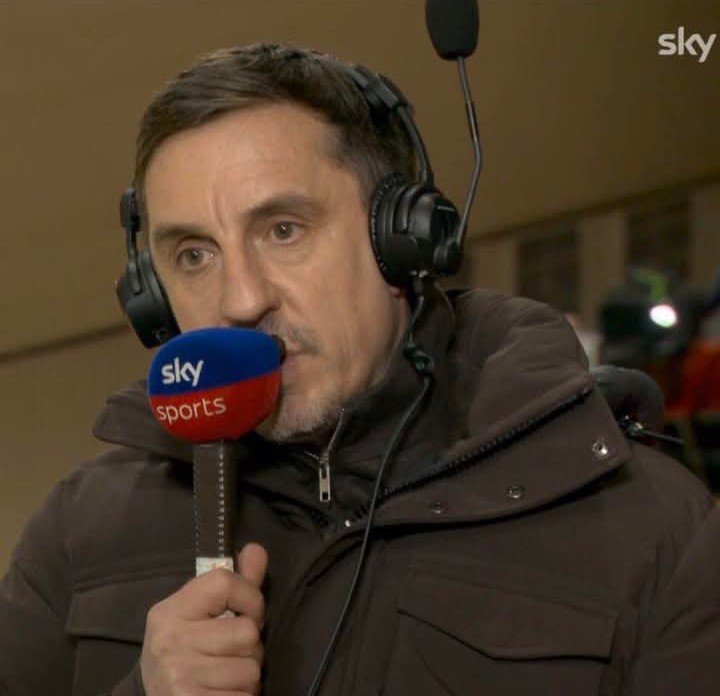
Gary Neville’s latest update on Manchester United’s managerial search offers a revealing snapshot of a club trying—perhaps belatedly—to grow up.
According to Neville, United have now formally begun the process of identifying their next permanent head coach.
Not in a panicked, reactive way, but through what has been described as a structured, analytical approach: speaking to potential candidates, gathering data, and assessing who best fits the future direction of the club. For supporters exhausted by a decade of turbulence, that alone feels like a small but significant shift.
Crucially, United are adamant they will not be rushed into an appointment. The club intends to wait until the latter stages of the season before making a final decision, resisting external pressure from results, media noise, or fan sentiment. This is a notable change from previous cycles, where urgency and optics often dictated decisions more than long-term planning.
That patience also frames the situation around Michael Carrick. Currently part of the coaching setup, Carrick is not being positioned as an automatic successor, nor is he being ruled out. Instead, United appear willing to let his work speak for itself.
If, by the end of the season, Carrick chooses to put himself forward, he would enter a competitive selection process rather than receive preferential treatment. In other words, sentimentality will not trump scrutiny.
The mention of Thomas Tuchel is particularly telling.
Tuchel represents the calibre of manager United believe they can attract: a proven elite coach with Champions League pedigree, tactical authority, and experience handling high-pressure environments. By framing Carrick as a potential candidate alongside figures like Tuchel, the club is both challenging Carrick to prove his credentials and signalling to the football world that this role remains a premier destination.
Underlying all of this is an increasing emphasis on data and analysis. United’s hierarchy are reportedly evaluating candidates not just on trophies or reputation, but on playing philosophy, squad development, adaptability, and alignment with recruitment strategy. This suggests a broader identity conversation—what Manchester United want to look like on the pitch over the next five years, not just who can stabilise results next month.
However, patience comes at a cost. Waiting until the end of the season risks short-term inconsistency, uncertain performances, and growing frustration among fans desperate for clarity. The interim period will test the dressing room, the coaching staff, and the resolve of the board itself. Saying you won’t be “bounced” into a decision is easy; holding that line when results wobble is far harder.
Still, Neville’s update paints a picture of a club at least attempting to break old habits. United are acknowledging past mistakes, prioritising process over impulse, and widening their lens beyond the next quick fix.
Whether this approach delivers the right appointment remains to be seen—but for the first time in years, the conversation sounds less like firefighting and more like planning.
In modern football, that alone feels like progress.