🚨 Matheus Cunha plays down claims of tactical obsession under Ruben Amorim:
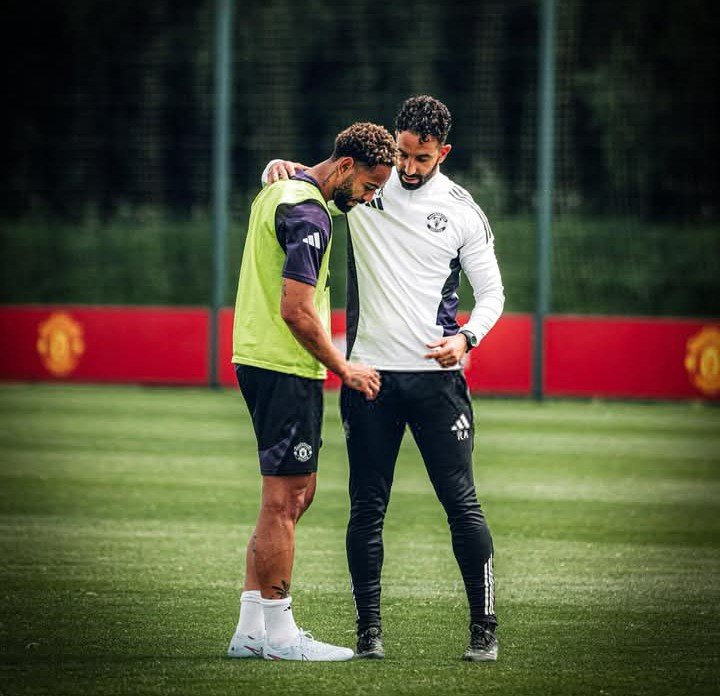
Matheus Cunha has addressed the growing narrative surrounding Ruben Amorim’s tactical approach at Sporting CP, dismissing claims that the Portuguese manager’s methods are overly obsessive or rigid. With Amorim often associated with a structured, defensive-minded system, critics have sometimes suggested that his teams are defined by a set pattern of play, relying heavily on specific numbers, shapes, and formations. However, Cunha, a key player in Amorim’s setup, has challenged this perspective, offering a fresh insight into how the team operates under the coach’s guidance.
Speaking to the media, Cunha expressed his belief that “football numbers and shapes can be misleading,” offering a more flexible take on the tactical framework employed by Amorim.
While it’s true that the coach has built a reputation for favoring a solid, well-organized defensive structure — often categorized as a trademark of his style — Cunha emphasized that there’s more to the team’s attacking approach than meets the eye. “We attack in many different ways,” the forward explained, suggesting that Sporting’s attacking transitions and offensive play aren’t confined to a single tactical formula.
Cunha’s comments reflect an important aspect of Amorim’s coaching philosophy, one that prioritizes versatility and fluidity in attack.
Sporting CP’s ability to shift between different attacking shapes and strategies is one of the team’s key strengths, according to the Brazilian forward. The coach’s tactical flexibility is essential to this, allowing players the freedom to express themselves and adapt to various situations on the pitch.
For Cunha, the team’s offensive play isn’t dictated by rigid formations or fixed instructions but by an intuitive understanding of how to exploit spaces and create chances in different contexts.
However, it’s clear that Amorim’s well-drilled defensive structure is still a key part of his managerial identity.
While Cunha admits that the team’s attacking approach is more varied, he concedes that Sporting usually defends in what many observers consider “the structure everyone labels as Ruben’s.” This is the element that most fans and analysts associate with Amorim’s style — a solid defensive shape designed to stifle opposition attacks and transition quickly to counter.
Despite this, Cunha’s comments reinforce the idea that Amorim’s system is not as one-dimensional as it may sometimes appear.
Cunha’s remarks come amid ongoing debates about Amorim’s tactical influence at Sporting. The coach has had considerable success since taking charge in 2020, winning multiple trophies and developing a reputation for tactical discipline and a focus on youth development. However, some have critiqued the team’s style for being too predictable, particularly in terms of their defensive solidity and the structured nature of their attacking play.
Cunha, however, offers a different perspective — one that paints Amorim’s tactical setup as adaptable, dynamic, and multifaceted. The notion that Sporting CP’s play can’t be reduced to simple shapes and numbers is a key point that Cunha is trying to convey.
He’s keen to shift the narrative around Amorim’s methods, showing that there’s far more creativity and fluidity involved in the team’s approach than the “tactical obsession” label suggests.
In the ever-evolving world of modern football, where tactical systems are constantly evolving, Cunha’s comments are a reminder that there’s often more than meets the eye when it comes to a team’s style of play. Sporting CP under Ruben Amorim may be defined by certain structures, but according to Cunha, those structures don’t limit their attacking potential or creativity. Instead, they provide the stability needed to unleash a more dynamic offensive game.