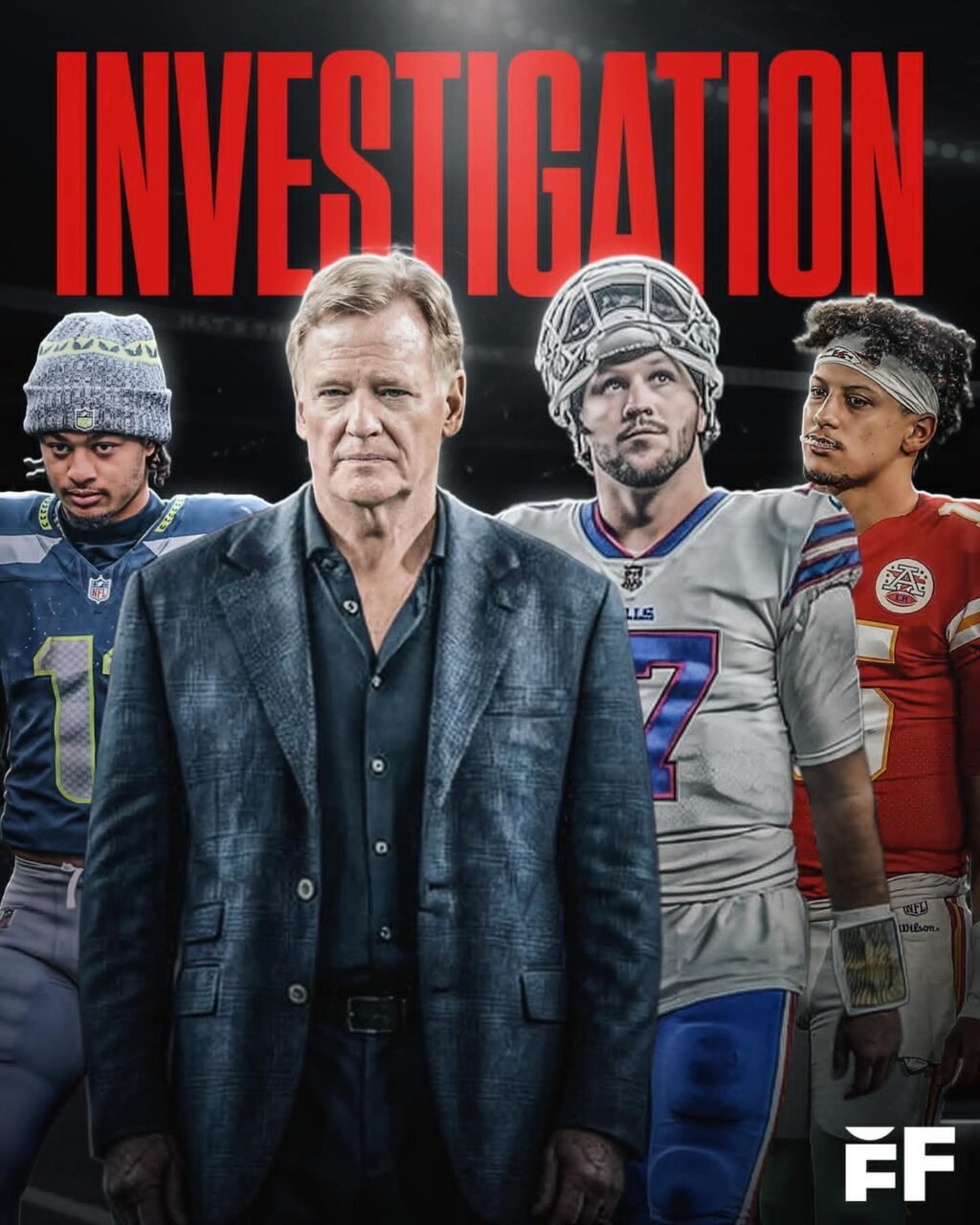
Justice Department Launches Antitrust Investigation Into NFL Broadcast Practices
WASHINGTON — The U.S. Department of Justice has opened a sweeping antitrust investigation into the National Football League, examining whether the league has engaged in “anticompetitive tactics that harm consumers” as games increasingly migrate from free broadcast television to expensive paid streaming platforms .
The probe, first reported by The Wall Street Journal and confirmed by multiple sources to CBS News and NBC News, represents the most significant federal scrutiny of the NFL’s media strategy in decades. At its core, the investigation questions whether the league has stretched a 1961 antitrust exemption beyond its original intent—forcing football fans to spend nearly $1,000 annually just to follow their favorite teams .
A government official familiar with the investigation’s origins told CBS News that the probe is “about affordability for consumers and creating an even playing field for providers” . The Justice Department declined to comment on the record, and the White House referred questions back to the department .
The Fragmented Landscape: How Watching Football Became a Subscription Puzzle
When the Sports Broadcasting Act of 1961 granted the NFL limited antitrust immunity, the television landscape bore little resemblance to today’s fragmented ecosystem. The law allowed professional football teams to collectively license “sponsored telecasts”—commercial-supported broadcasts—to national networks, ensuring games would remain accessible to the general public over free airwaves .
That model has since been transformed. During the 2025 season, the NFL distributed games across an unprecedented array of platforms: traditional broadcasters CBS, Fox, ABC, and NBC; cable networks ESPN; and streaming services including Amazon Prime Video, YouTube, Peacock, and Netflix . The Federal Communications Commission noted in February that NFL games aired on 10 different services, with 20 regular season games and one playoff game appearing exclusively on subscription platforms .
For fans seeking to watch every game involving their preferred team—or simply all Sunday afternoon matchups—the financial burden has escalated dramatically. Sen. Mike Lee (R-Utah), who chairs the Senate Judiciary Subcommittee on Antitrust, Competition Policy, and Consumer Rights, wrote to the DOJ and FTC last month that viewers spent “almost $1,000 on cable and streaming subscriptions” to watch the entire season . Other estimates cited by the FCC have placed the cost as high as $1,500 .
“To the extent collectively licensed game packages are placed behind subscription paywalls, these arrangements may no longer align with the statutory concept of sponsored telecasting or the consumer-access rationale underlying the antitrust exemption,” Lee said in a statement reacting to the DOJ investigation .
The NFL’s Defense: ‘Most Fan-Friendly Model in Sports’
The league has moved swiftly to defend its distribution strategy, pointing to statistics that paint a different picture. In a statement, the NFL said its media distribution model is the “most fan and broadcaster-friendly in the entire sports and entertainment industry” .
The league emphasized that 87% of its games remain available on free broadcast television, including “100% of games in the markets of the competing teams” . The 2025 season, the NFL noted, “was our most viewed since 1989 and reflects the strength of the NFL distribution model and its wide availability to all fans” .
Commissioner Roger Goodell has previously defended the league’s approach in court. During testimony in a related class-action lawsuit over the “Sunday Ticket” package, Goodell argued that the league has “sung it from the mountaintops” about its commitment to reaching the broadest possible audience on free television .
“We want to reach the broadest possible audience on free television,” Goodell testified. “I think we are very pro-consumer. Our partners have found ways to build our fan base” .
The Legal Framework: A 1961 Law Tested in the Streaming Era
The investigation hinges on a fundamental legal question: Does the Sports Broadcasting Act’s antitrust exemption, crafted for an era of three broadcast networks, apply to today’s paid streaming and cable platforms?
The act was born from a different media reality. In 1961, Congress sought to balance antitrust concerns with the public interest in accessing live sports. By allowing teams to pool their media rights, the law enabled the NFL to negotiate national broadcast deals that brought games into millions of homes for free .
But the act specifically referenced “sponsored telecasts”—a term that contemplates advertising-supported, free-to-viewer broadcasts. When the same games, or packages of games, are placed behind subscription paywalls, Lee and other critics argue, the legal rationale for the exemption evaporates .
“The modern distribution environment differs substantially from the conditions that precipitated this exemption,” Lee wrote in his letter to the Justice Department last month. “Instead of a small number of free broadcast networks, the NFL now licenses games simultaneously to subscription streaming platforms, premium cable networks and technology companies operating under different business models” .
The FCC has also entered the fray. In February, the commission announced it would seek public comment on how the shifting sports media landscape affects consumers, broadcasters, and local news ecosystems .
“Given the nexus between sports programming and the local media marketplace—as well as the FCC’s ongoing work to support local news and reporting—we believe it is important for us to evaluate the sports media landscape and understand how changes have impacted consumers and broadcasters,” the agency wrote .
Parallel Legal Battles: The ‘Sunday Ticket’ Precedent
The DOJ investigation arrives against the backdrop of a potentially transformative legal defeat for the NFL. Last June, a federal jury in Los Angeles found the league liable for violating antitrust laws in its distribution of the “Sunday Ticket” package—the out-of-market Sunday afternoon games that have traditionally been sold as a premium subscription .
The jury ordered the NFL to pay $4.7 billion in damages to 2.4 million residential subscribers and 48,000 businesses that purchased the package on DirecTV between 2011 and 2022. Under federal antitrust law, that award could be tripled to more than $14 billion .
The plaintiffs in that case argued that the NFL restricted competition by offering “Sunday Ticket” exclusively on a satellite provider at inflated prices. The league maintained it had the right to sell the package under its antitrust exemption, but the jury sided with subscribers .
Judge Philip S. Gutierrez is scheduled to hear post-trial motions on July 31, and the NFL has vowed to appeal. Any damages or changes to the league’s distribution model would be stayed until appeals are exhausted, potentially reaching the 9th Circuit Court of Appeals and the Supreme Court .
That verdict, while subject to appeal, has already sent shockwaves through the league office and may have prompted renewed antitrust scrutiny from federal regulators.
The Media Rights Chessboard: Billions at Stake
The DOJ investigation lands at a particularly delicate moment for the NFL’s business strategy. The league is currently navigating complex media rights negotiations that could reshape the financial future of professional football.
The NFL has an opt-out window with CBS, NBC, and Fox following the 2029-30 season. The league’s agreements with those networks, as well as with Amazon, run through the 2033-34 season, while its ESPN deal extends through 2034-35 .
But the NFL is reportedly weighing whether to waive its opt-out rights in exchange for higher rights fees immediately. CNBC reports the league is seeking as much as $1 billion more per season from Paramount Skydance, the parent company of CBS, to continue broadcasting games through the 2033-34 season .
Puck’s John Ourand has reported that CBS’s annual rights fee could increase from $2.1 billion to $3 billion under a renegotiated deal . The league appears to be positioning itself to capitalize on the streaming revolution while maintaining its traditional broadcast relationships—a balancing act that the DOJ will now scrutinize.
NFL broadcasters, most notably Fox, have privately voiced concerns that the league is spreading its games across too many streaming services, potentially making viewing prohibitively expensive and confusing for fans . A recent Wall Street Journal editorial—whose parent company, Dow Jones, is owned by Fox’s Rupert Murdoch—argued that the league might be violating its antitrust exemptions .
Political Pressure Mounts From Both Sides of the Aisle
The investigation has drawn attention from lawmakers across the political spectrum, suggesting that concerns about sports media consolidation transcend partisan divides.
Lee, a conservative Republican known for his strict antitrust views, has been the most vocal critic. But he has been joined by Sen. Elizabeth Warren (D-Massachusetts) and Rep. Pat Ryan (D-New York), who have also urged the Trump administration to review the NFL’s antitrust exemptions .
Lee said he is “glad they’re tackling this,” referring to the DOJ’s decision to open an investigation . The senator’s office has framed the issue as one of basic consumer protection: fans who grew up watching their local teams for free should not be forced to navigate a maze of subscription services to maintain that access.
The FCC’s public comment process, launched in February, has already attracted significant attention. The commission is specifically examining whether the current marketplace benefits or harms consumers, and whether the fragmented media landscape facilitates or restricts the ability of traditional media to broadcast in the public interest .
What Comes Next: Uncertainty for Fans and the League
The DOJ investigation remains in its early stages, and the full scope has not been disclosed. Investigators are expected to examine the NFL’s media rights deals, the league’s interpretation of the Sports Broadcasting Act, and whether consumers have been harmed by the migration of games to paid platforms .
Potential outcomes range from a clean bill of health for the NFL to a formal antitrust lawsuit that could force the league to restructure its media rights entirely. Between those extremes lie possible consent decrees or settlements that might impose new conditions on how the NFL packages and sells its games.
For fans, the investigation offers a glimmer of hope that watching football could become simpler and more affordable. For the NFL, which generated more than $20 billion in revenue in 2024, the stakes could hardly be higher. The league’s media rights deals are the engine of its economic dominance, and any fundamental restructuring would have ripple effects across professional sports.
The NFL has weathered antitrust challenges before—most notably the USFL’s antitrust lawsuit in the 1980s, which the league won but which exposed vulnerabilities in its business model. But the current investigation arrives at a moment of maximum complexity, as traditional broadcasting gives way to streaming and as consumers grow increasingly frustrated with the cost and confusion of following their teams.
For now, the league’s position remains unchanged. “The NFL’s media distribution model is the most fan and broadcaster-friendly in the entire sports and entertainment industry,” the league said in its statement .
The Justice Department has yet to determine whether it agrees.