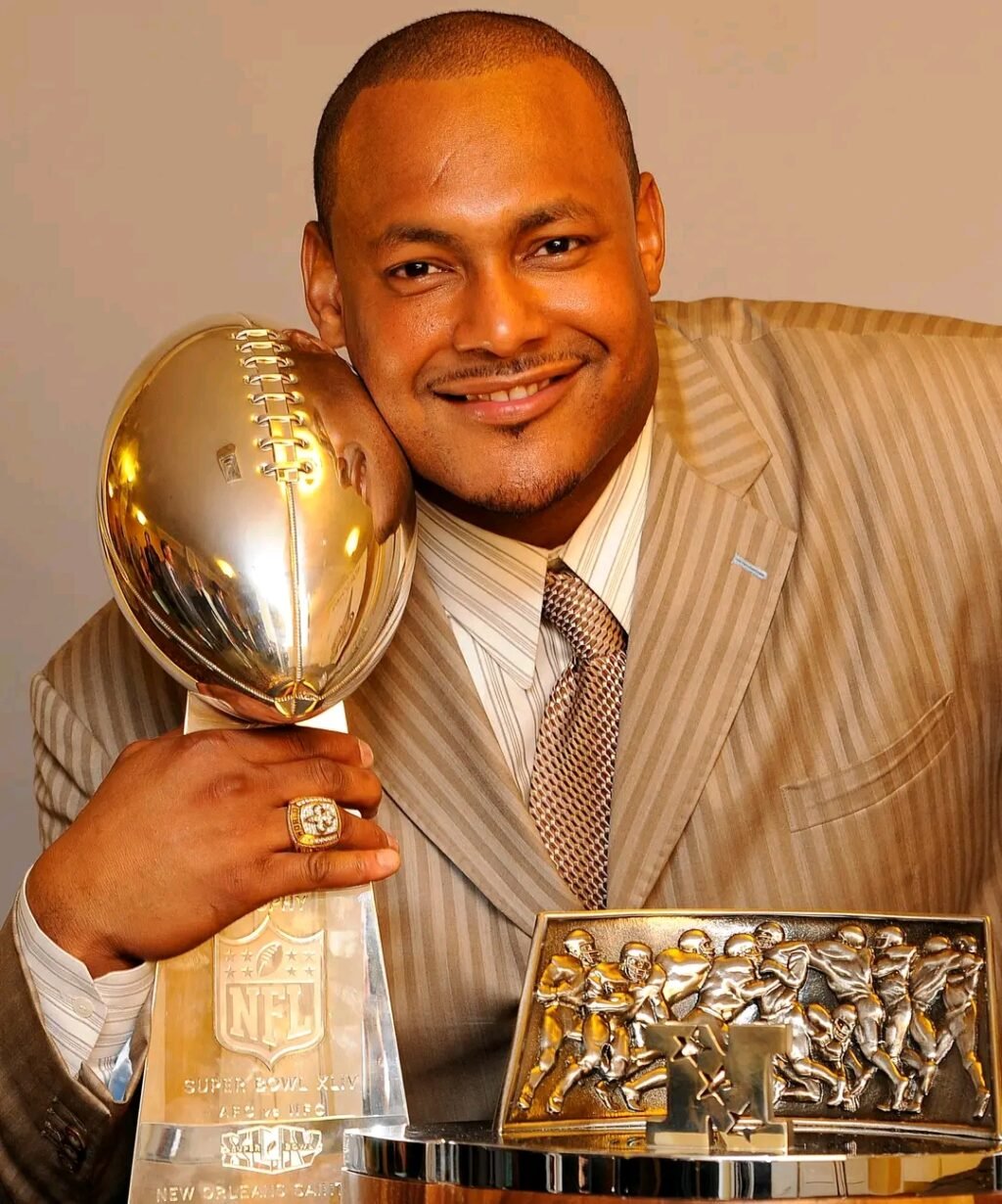
10 Years Ago Today, We Lost Saints Legend Will Smith: A Legacy of Power, Perseverance, and Unfinished Business
By [Staff Writer] – Saints Legacy Insider
NEW ORLEANS, LA – It was a spring night that shattered a city still healing. Ten years ago today—April 9, 2016—the unthinkable happened. A senseless act of violence in the Lower Garden District stole the life of a Super Bowl champion, a father, a husband, and one of the most underrated pillars in New Orleans Saints history.
Will Smith was just 34 years old.
A decade has passed since that tragic evening, yet the wound remains fresh for teammates, fans, and the family he left behind. As we mark this solemn anniversary, we don’t just remember how Will Smith died. We remember how he lived: as a mauler on the defensive line, a quiet leader in the locker room, and a philanthropist who gave his heart to the Crescent City.
This is the story of No. 91—the legend we lost too soon.
THE MAN BEHIND THE HELMET
To understand the void left by Smith’s absence, you have to understand the player he was. In an era defined by the high-flying offense of Drew Brees and Sean Payton, Smith was the gritty, unglamorous anchor of the defense.
Selected 18th overall in the first round of the 2004 NFL Draft out of Ohio State, Smith wasn’t supposed to be a flashy superstar. He was supposed to be a foundation—and he delivered.
Standing 6-foot-3 and weighing 282 pounds, Smith was a “mauler,” as teammates called him. He didn’t win with pure speed; he won with relentless power and an unforgiving motor that made offensive tackles dread practice. Over ten seasons—all in Black and Gold—Smith racked up 67.5 sacks, a total that still ranks fourth in franchise history. He appeared in 139 games, starting 120 of them, and led the team in sacks four different times.
But the numbers only tell half the story.
THE SUPER BOWL RUN: A CAREER DEFINED
If you ask Saints fans to close their eyes and picture Will Smith, most will see the same thing: the aftermath of Garrett Hartley’s game-winning field goal in the 2009 NFC Championship Game.
As the kick sailed through the uprights to send the Saints to their first Super Bowl in franchise history, Smith was the first man to sprint onto the field, arms raised in pure, unfiltered joy. It was the culmination of years of misery—the “Aints” era, the devastation of Hurricane Katrina—washed away in a single moment.
Smith was instrumental in that historic 2009 campaign. While the world marveled at Brees and the offense, Smith posted a career-high 13 sacks (second in the NFC), added 77 tackles, and forced three fumbles. He was a terror off the edge, a one-man wrecking crew who finally gave New Orleans a pass rush worthy of a championship.
In Super Bowl XLIV, Peyton Manning was harassed all night. Smith’s pressure up the middle was a massive reason why the Colts’ offense never found a rhythm. Without No. 91, there is no Lombardi Trophy in the display case.
THE TRAGEDY: A NIGHT THAT CHANGED NEW ORLEANS
The details of April 9, 2016, are still painful to recount.
Late on a Saturday night, following a minor fender-bender involving a Hummer H2, an argument broke out. According to police reports, the driver of the Hummer, Cardell Hayes, produced a handgun and shot Smith multiple times. Smith’s wife, Racquel, was also shot twice in the leg but survived.
Witnesses described a chaotic scene near the intersection of Sophie Wright Place and Felicity Street. One tourist, in town for the French Quarter Festival, recalled hearing six to eight gunshots and rushing to aid the injured woman.
By the time police arrived, Will Smith was gone. Slumped over the steering wheel of his Mercedes SUV, the hero of the Superdome had been taken by a senseless act of road rage.
The news spread like wildfire. Social media erupted not just with grief, but with disbelief. How could this happen to a man who gave so much to his community? How could this happen in the city he helped lift from the ashes of Katrina?
THE TRIAL AND AFTERMATH
Cardell Hayes was arrested at the scene. He was later convicted of manslaughter (a lesser charge than the initial second-degree murder indictment) and sentenced to 25 years in prison.
The trial revealed the tragic complexities of the night. A coroner testified that Smith had been shot seven times in the back and once in the side. Hayes’ defense claimed the confrontation escalated after a separate accident moments earlier, and that Smith had been legally drunk at the time of the incident.
For the city, the trial offered little closure. There is no justice that brings back a father to his three children: William, Wynter, and Lisa.
A LEGACY OF GIVING: THE ‘WHERE THERE’S A WILL’ FOUNDATION
While the headlines focused on the tragedy, those who knew Smith best want the world to remember his heart.
Long before the Super Bowl, Smith and his wife Racquel founded the “Where There’s a Will There’s a Way” foundation. The mission was simple: to mentor, assist, and provide educational support to at-risk children in Louisiana and in his hometown of Utica, New York.
Every year, the Smiths hosted the “Smith Family Christmas” event, providing over 60 families with holiday meals and gifts. Smith also worked tirelessly with Bridge House and Grace House—organizations dedicated to treating men and women dependent on drugs and alcohol.
He didn’t just write checks. He showed up. He brought his teammates to serve as celebrity waiters for charity events. He returned to his high school to speak to young athletes about discipline and integrity. Will Smith was the definition of a “community-first” athlete.
HONORS THAT CAME TOO LATE
In the wake of his death, the tributes poured in from across the NFL. LeBron James, Malcolm Jenkins, and Tracy Porter were among the voices expressing shock and sorrow. But the most meaningful honors came from the organization he bled for.
Just weeks before his murder, a media panel had voted Smith into the New Orleans Saints Hall of Fame in his first year of eligibility. Tragically, he never got to give that speech. His wife, Racquel, accepted the honor on his behalf on October 28, 2016—her first public remarks since the shooting.
In 2019, the Saints went a step further, inducting Smith posthumously into the team’s prestigious Ring of Honor inside the Caesars Superdome. Now, his name hangs in the rafters alongside the immortals of the franchise—a permanent reminder of his contribution to the greatest era in Saints history.
THE UNFINISHED BUSINESS
Ten years later, the question “What if?” still lingers.
What if Will Smith had gotten to coach, as he had planned to do with the Saints? What if he had watched his children grow up? What if the violence that plagued New Orleans in 2016 hadn’t claimed one of its best citizens?
In a tragic twist of irony, Smith himself had pleaded with his adopted city to “stop the violence.” In a 2012 tweet that resurfaced after his death, he wrote: “Wow, 20 murders in 26 days? New Orleans.. Please Stop the Violence!”
Ten years later, that plea still echoes.
CONCLUSION: NEVER FORGOTTEN
Today, as the Saints prepare for the 2026 season, the roster looks very different than it did a decade ago. The Super Bowl core has mostly retired. But the spirit of Will Smith remains embedded in the franchise’s DNA.
He was the unsung hero of the Saints’ saga. He was the steady hand in the storm. He was a husband, a father, and a champion.
We cannot undo the tragedy of April 9, 2016. But we can honor his memory by remembering the man, not just the victim. We can support the causes he loved. We can look up at the Ring of Honor and smile, knowing that No. 91 gave everything he had to the city that loves him back.
Rest in peace, Will. You are gone, but you will never, ever be forgotten.
— For the Smith family: William, Wynter, Lisa, and Racquel. The Saints Nation stands with you today and always.