Inside the Cowboys’ War Room: When Jerry and Stephen Jones Nearly Came to Blows
The Dallas Cowboys have long been defined by the larger-than-life persona of owner and general manager Jerry Jones. But beneath the surface of America’s Team, a complex and occasionally volatile father-son dynamic has shaped some of the franchise’s most pivotal decisions. A recent report reveals that two of the most consequential choices in team history nearly escalated into physical confrontations between Jerry and his son, Stephen Jones .
The 1995 Showdown: A Physical Altercation Over Deion Sanders
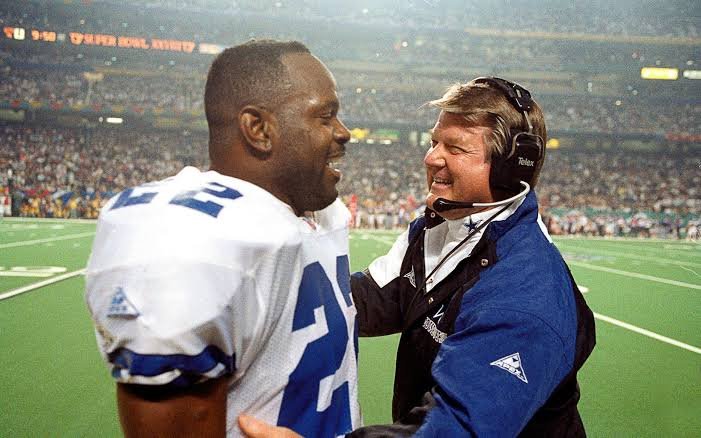
The first major flashpoint occurred in the spring of 1995. Jerry Jones was determined to sign the legendary cornerback Deion Sanders, a move that would send shockwaves through the NFL. Stephen, however, was vehemently opposed, citing significant concerns about the salary cap implications of a $35 million deal .
The disagreement escalated far beyond a typical front-office debate. According to The Athletic, the argument became so heated that Stephen physically shoved his father against a wall. In a moment of raw intensity, Stephen shouted, “You really gonna do this?” while pressing his arm into Jerry’s chest. The elder Jones reportedly shot back, “What are you gonna do, hit me?” .
Despite the physical confrontation, Jerry got his way. The Cowboys signed Sanders, who went on to be a critical piece of the team’s Super Bowl run that season. The victory vindicated Jerry’s gamble, but it also established a critical precedent: Stephen was never going to be a simple yes-man. The incident underscored a fundamental truth about their relationship—they would not always agree, and Stephen would fight for his convictions, even against his father .
The 2014 Draft: A Clash Over Johnny Manziel
Nearly two decades later, the father-son duo found themselves on another collision course. The setting was the 2014 NFL Draft. Quarterback Johnny Manziel, the former Heisman Trophy winner and a polarizing figure, had surprisingly fallen to the Cowboys with the 16th overall pick. Jerry Jones, drawn to the star power and potential of “Johnny Football,” was eager to make the pick .
Stephen Jones, however, saw a massive risk. He was concerned about Manziel’s talent, work ethic, and off-field behavior. He believed the safer, smarter pick was Notre Dame offensive lineman Zack Martin . While the argument didn’t turn physical this time, the intensity was palpable. Stephen, being the only person in the room with the spine to challenge his father, successfully steered the team away from the flashy quarterback and toward the dependable lineman .
The decision infuriated Jerry. Stephen recalled his father’s furious reaction: “I hope you’re happy. You don’t do special things in life—I would have never bought the Dallas Cowboys—making middle-of-the-road decisions. And what you just did is down the middle. You’ll never be great” .
History proved Stephen’s judgment to be remarkably sound. Manziel became a colossal bust, playing only two seasons and throwing as many interceptions as touchdowns . Meanwhile, Zack Martin evolved into a nine-time Pro Bowler and one of the greatest offensive linemen of his generation . As former Dallas Mayor and Jones family friend Mike Rawlings put it, “There’s a belief that sometimes Stephen is part of the mistakes Jerry makes. There’s also the belief that sometimes he saves Jerry’s ass” .
A Different Path Forward
These explosive disagreements highlight the evolving power dynamic within the Cowboys organization. Jerry Jones, now 83, has stated he has no formal succession plan and intends to remain in charge, bluntly saying, “One day, I just won’t be here to toss my two cents in” . Yet, those close to the team believe Stephen is already charting a distinctly different course for the future. Cowboys legend Troy Aikman noted that Stephen lacks his father’s ego, and his tenure is expected to “feel a lot different” .
This shift in philosophy is already being felt behind the scenes, and is a key part of the ongoing narrative of the Cowboys’ succession plan . The two defining decisions—one a gamble that brought a championship, the other a prudent choice that avoided disaster—serve as a potent reminder of the fiery, often contentious relationship that has steered the Dallas Cowboys for decades.