Jerry Jones Claims He Has No Cowboys Succession Plan, But Stephen Jones Looms
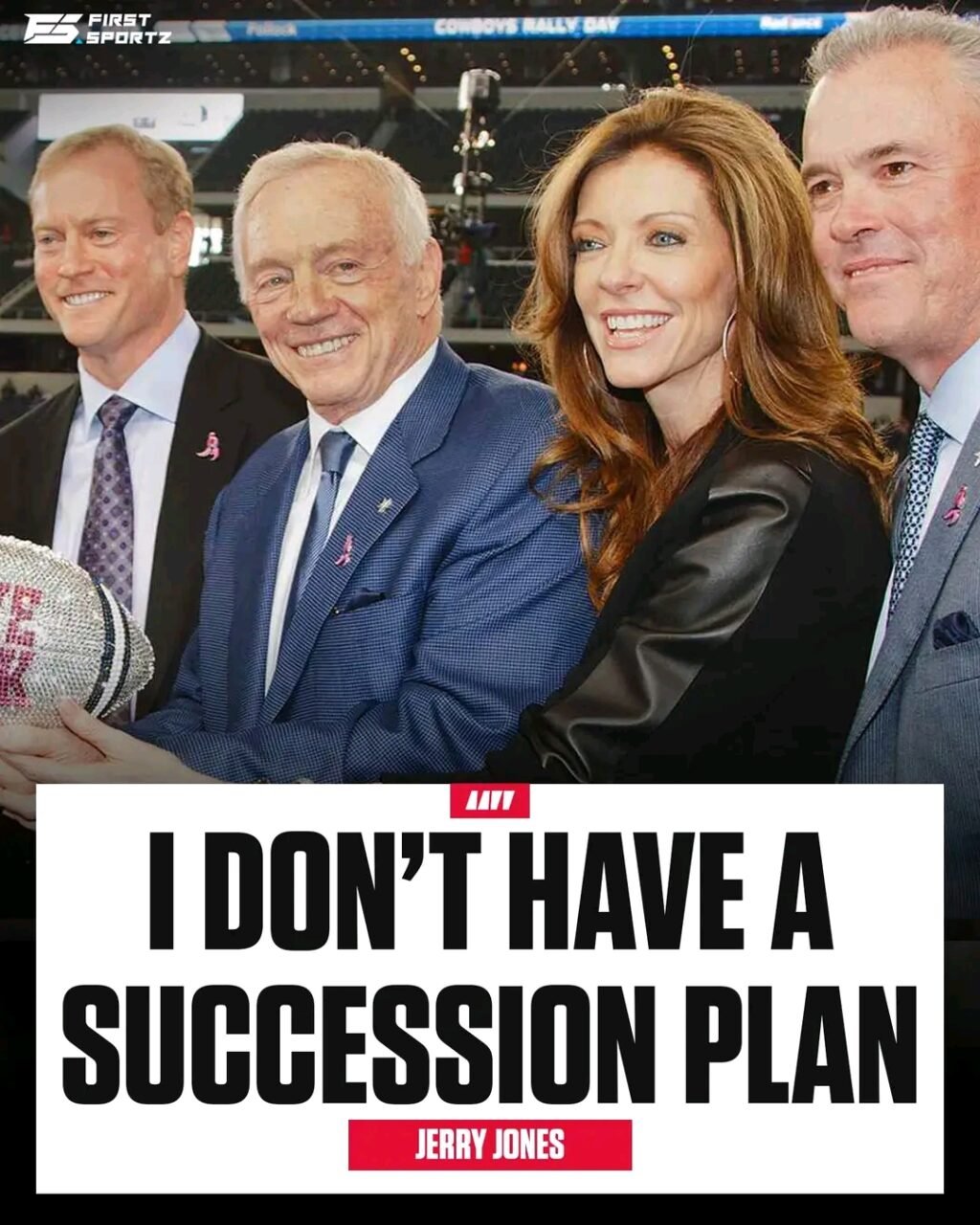
DALLAS — For 37 years, Jerry Jones has been the singular force behind the Dallas Cowboys. As owner, president, and general manager, the 83-year-old has made every final call for one of the most valuable sports franchises in the world. But in a recent interview with Zak Keefer of The Athletic, Jones made a characteristically blunt admission about his eventual departure: there is no formal plan .
“I don’t have a succession plan, I don’t,” Jones said. “One day I just won’t be here to toss my two cents in.”
While the statement may seem like a stunning lack of foresight for a man who purchased the team for $140 million in 1989 and built it into a $15.5 billion empire, the reality inside the Cowboys’ organization tells a different story . Behind the scenes, a quiet transition has been underway for decades, and the man most likely to inherit the throne has been preparing his entire adult life.
The Heir Apparent
Stephen Jones, Jerry’s eldest son, has been the Cowboys’ chief operating officer and executive vice president of player personnel for years. He has sat alongside his father in draft rooms, contract negotiations, and front-office meetings since he was 24 years old. By all accounts, he is already one of the most influential executives in the NFL .
“He’s about as good as anybody I’ve ever been around in giving deference when he should,” Jerry said of his son. “Now, don’t confuse that with lack of intensity. He’ll bite back real hard when he has to. Real hard. He just does it with more grace than I do.”
According to The Athletic, all three of Jerry’s children—Stephen, Charlotte Jones, and Jerry Jones Jr.—own equal ownership shares and will collectively run the organization after Jerry is gone. However, Stephen’s voice will carry the most weight when it comes to football operations. “It’ll be his team,” Keefer wrote .
A Different Kind of Leadership
If Stephen does take the reins, those close to the organization expect a starkly different era for America’s Team. Troy Aikman, the Hall of Fame quarterback who led the Cowboys to three Super Bowl titles under Jerry’s ownership, told The Athletic that the change will be significant .
“I’m not pushing Jerry out by any means, but when that day comes, it’s gonna feel a lot different,” Aikman said. “From my interactions with him, Stephen doesn’t have the ego his father has. That’ll serve him well.”
Darren Woodson, another Cowboys legend from the 1990s dynasty, was even more blunt. Woodson, who maintains close ties to the organization through his business at The Star practice facility, believes Stephen will be less forgiving when difficult personnel decisions must be made .
“Stephen’s going to chart a different path. He’s got a little bit more motherf–ker in him,” Woodson said. “The team keeps making emotional decisions. They keep guys because Jerry likes them personally. I don’t think that leash will be as long with Stephen.”
The Manziel Lesson
One of the clearest illustrations of the father-son dynamic came during the 2014 NFL Draft. Jerry wanted to select quarterback Johnny Manziel with the 16th overall pick—a flashy move that would have generated massive headlines. Stephen led the charge to select offensive lineman Zack Martin instead .
Martin is now a future Hall of Famer. Manziel was out of the league within a few years. According to Keefer’s reporting, Jerry’s reaction to the pick was telling .
“I hope you’re happy,” Stephen recalled his father saying. “You don’t do special things in life—I would have never bought the Dallas Cowboys—making middle-of-the-road decisions. And what you just did is down the middle. … You’ll never be great.”
History has proven Stephen right, and the moment stands as a testament to the different philosophies that could define the Cowboys’ future.
A Philosophical Divide on Negotiations
The contrast in approach extends to contract negotiations, where Stephen has earned a reputation as a notoriously tough bargainer. He described the difference to The Athletic using a negotiating analogy .
“With agents these days, you give them an inch and they’ll take a mile,” Stephen said. “If a deal’s within striking distance, Jerry will lose this point and this point and this point and if it gets done, he’ll live with it. It’ll eat at me a little more.”
When the Day Comes
Despite the careful preparation, the transition when it comes will likely be abrupt. Jerry has made clear he has no intention of stepping aside willingly .
“I don’t have a succession plan, I don’t,” he reiterated. “One day I just won’t be here to toss my two cents in.”
The thought of life without his father at the helm is difficult for Stephen to even contemplate. When asked about the possibility of the Joneses no longer owning the Cowboys, he gave a flat, emotional response .
“We certainly don’t wanna think about that,” Stephen said. “We don’t want it to be that way.”
Jerry Jones turns 84 in October. He has already beaten back cancer once, but age and mortality are undeniable. The Cowboys are now valued at an estimated $15.5 billion, the highest valuation of any sports franchise globally . There have been reports of interest from outside investors, including Mark Cuban, but the family has signaled no intention of selling .
The Legacy Question
For all his success in building the Cowboys brand, one number haunts Jerry Jones: 30. That is how many years have passed since Dallas last won a Super Bowl. The team hasn’t even appeared in a conference championship game since its last title in 1995 .
Jones said back in January that his “goal in life is to retire as the owner that won the most Super Bowls.” That title belongs to New England Patriots owner Robert Kraft, who has six rings to Jones’ three .
Stephen Jones, for his part, is focused on ending the drought—but he seems less concerned with the attention that comes with the pursuit .
“The drought… that’s what eats at us most,” he said. “When that Super Bowl ends, all you think about it is, ‘Hey, we’re gonna win this sumbitch this year.'”
As the 2026 season approaches, Jerry remains firmly in charge. But the question is no longer whether Stephen will take over—it’s when. And when that day comes, everyone seems to agree on one thing: the Dallas Cowboys will be a very different organization.