The Unlikely Synergy: Why Caitlin Clark and Angel Reese Are Key to Team USA’s World Cup Hopes
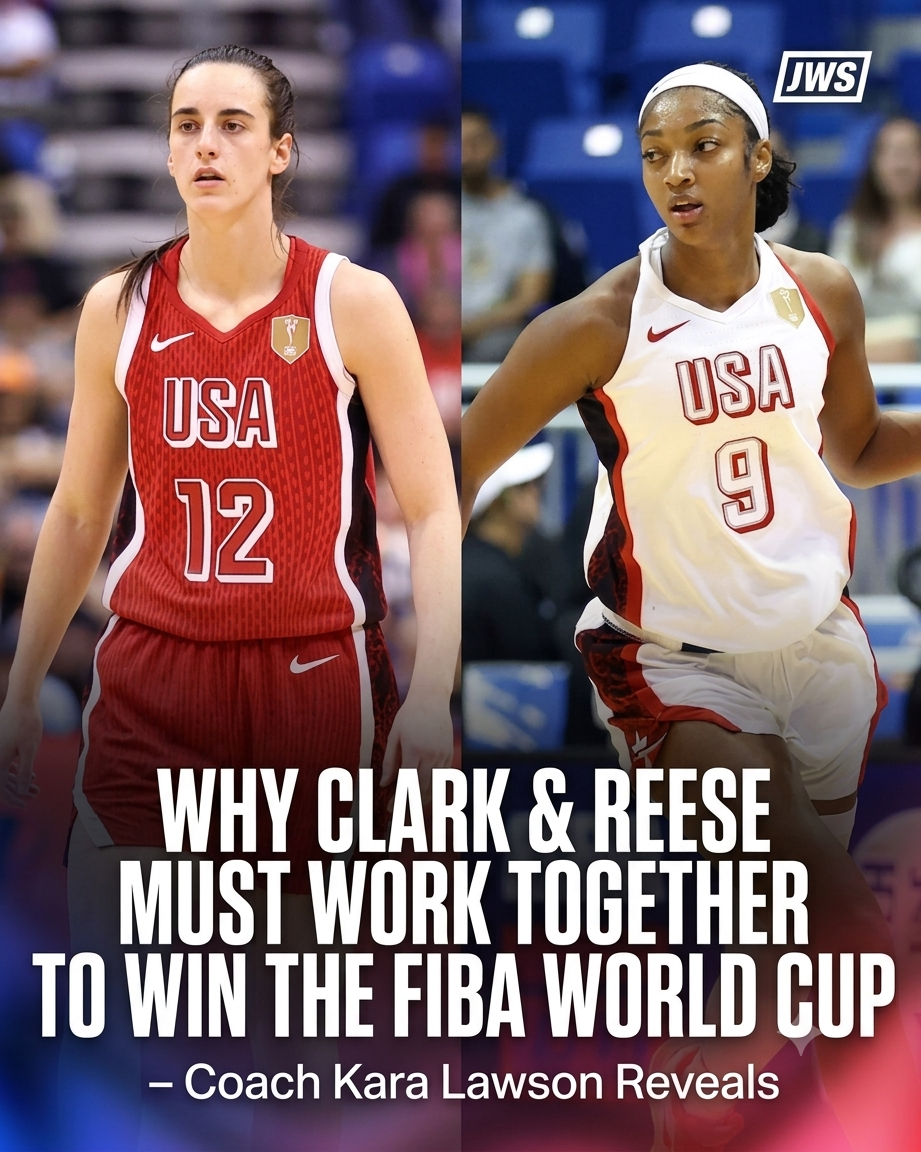
The 2026 FIBA Women’s World Cup is serving as a crucible for the United States, forging a team that, despite its immense talent, faces a crisis of chemistry. At the heart of this challenge is a compelling, ironic twist to one of basketball’s most storied rivalries. The future of Team USA’s gold medal hopes depends on Caitlin Clark and Angel Reese working together, a necessity made clear by head coach Kara Lawson’s stark assessments and the team’s near-miss against Italy.
A Narrow Escape Exposes Deep Fault Lines
Team USA’s campaign began with a warning shot in the form of a shocking 55-52 win over Italy . This was far from the expected dominance; it was an “ugly win” and the team’s lowest scoring total in 42 years . The performance prompted immediate concern and speculation.
The nail-biting victory was characterized by a stark offensive struggle. The starters combined for a paltry 5-of-23 shooting, and the team shot a dismal 28.6% overall, managing only 1-of-12 from three-point range . Even seasoned veterans like Breanna Stewart (1-of-9) struggled. Perhaps most shocking was Caitlin Clark’s output: 0-of-6 from the field for only one point, the first time in her professional career she was held without a field goal .
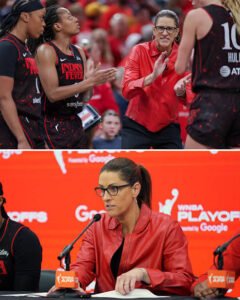
The lackluster play didn’t go unnoticed by Lawson. In a candid postgame address, she issued a stern wake-up call. “Let this be the last time that a team plays with more passion than us throughout the course of the game… Let this be the last time that all 12 don’t show up to compete at a high level,” she declared, emphasizing that the team’s talent alone would not secure victory: “We will not win on our talent. We will not win on it” .
The close call against Italy ignited a firestorm of analysis. A prominent narrative emerged suggesting that behind the all-star lineup, there is a significant rift within the team. Some analysts and fans have suggested that the team is disjointed, with a fundamental chemistry problem that goes beyond simple on-court struggles . Speculation has swirled about a generational divide, with comments suggesting “the olds don’t like the youngs” on a team where personal dynamics might be interfering with on-court performance . This internal friction is seen as a primary reason for the team’s lack of cohesion and passion . The implication was clear: the raw talent on the roster is not enough to overcome these internal divisions.
The “Difference Makers” Answer the Call
In this moment of crisis, it was the supposed rivals who stepped up to rescue the team’s performance. While the veterans faltered, Angel Reese proved to be a relentless force. She contributed 8 points, 3 rebounds, 1 steal, and 2 blocks. More importantly, her energy and physicality were infectious . Lawson herself provided high praise for the young forward’s performance.
“What I will say about Angel: When she gets in the game, she impacts,” Lawson said. “She finds a way to make an impact” . Lawson further acknowledged the importance of her young stars’ development, adding, “Caitlin [Clark], Paige [Bueckers], and Angel, they’re learning, and they’re growing. I thought Angel competed really hard tonight. I thought she was a difference maker for us” .
The sentiment from the fanbase and media was even more direct. The “Young and Turnt” second unit, featuring Clark, Reese, Bueckers, and Aliyah Boston, was seen as the team’s “needle movers” . One writer noted, “Team USA’s bench is so much better than the starters,” a common observation that highlighted the disconnect between the veteran starting lineup and the young, energetic bench .
A Viral Assist Silences the Doubters
The culmination of this narrative—that Clark and Reese cannot coexist—was spectacularly dismantled in Team USA’s next game against the Czech Republic. The Americans bounced back with a resounding 105-64 victory . Clark and Reese were again dynamic off the bench, leading the charge.
Clark finished with 9 points, a team-high 7 assists, and a game-high plus-minus . Reese continued her dominant interior play, putting up 13 points, 6 rebounds, and 3 steals . Their stat lines were impressive, but one play in particular symbolized a turning point.
Clark executed a clever behind-the-back crossover to penetrate the defense. As the defense collapsed, she delivered a pinpoint lob pass to a cutting Reese, who finished with a wide-open layup . The FIBA World Cup’s official social media account posted a slow-motion replay of the play, captioned, “The Caitlin Clark x Angel Reese connection is legit” .
This was more than just a highlight; it was visual proof that their on-court chemistry is real. As one report noted, “Clark and Reese are teammates for the duration of the World Cup in Germany,” and the assist reinforced the reality that they play off each other almost perfectly .
Despite their successful partnership, both players remain on the bench, with Lawson maintaining a starting lineup comprised of veterans . This decision has sparked questions about whether the team is prioritizing seniority over performance. However, Lawson’s system is giving the duo and the rest of the young core significant minutes and crucial responsibility . This rotation allows Clark to thrive as the team’s leader in assists (6.3 per game) and Reese to lead in rebounding (6.0 per game), proving their impact is maximized in their current roles .
The Road to Berlin: A United Front
The path to the World Cup final is clear: it runs directly through the chemistry of this team. The narrow escape against Italy served as a stark reminder that talent alone is insufficient . The team must embody the grit and passion that Lawson demands to win. The personal rivalry between Clark and Reese is a relic of their college days, a narrative that has been overwritten by their shared professional goal of winning a gold medal. As they move into the knockout stages, the entire team must rally around this unified purpose. The “old guard” must accept and integrate the infectious energy of the “new guard,” and the young stars must continue to provide the spark that has been missing. If Team USA is to win the FIBA World Cup, it will not be on the strength of its roster alone, but on the power of its unity—a unity embodied by the newfound and powerful connection between Caitlin Clark and Angel Reese .