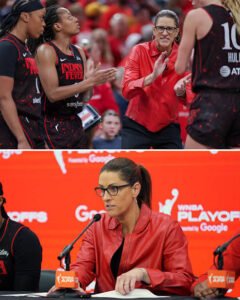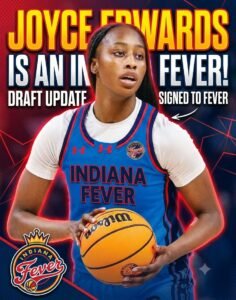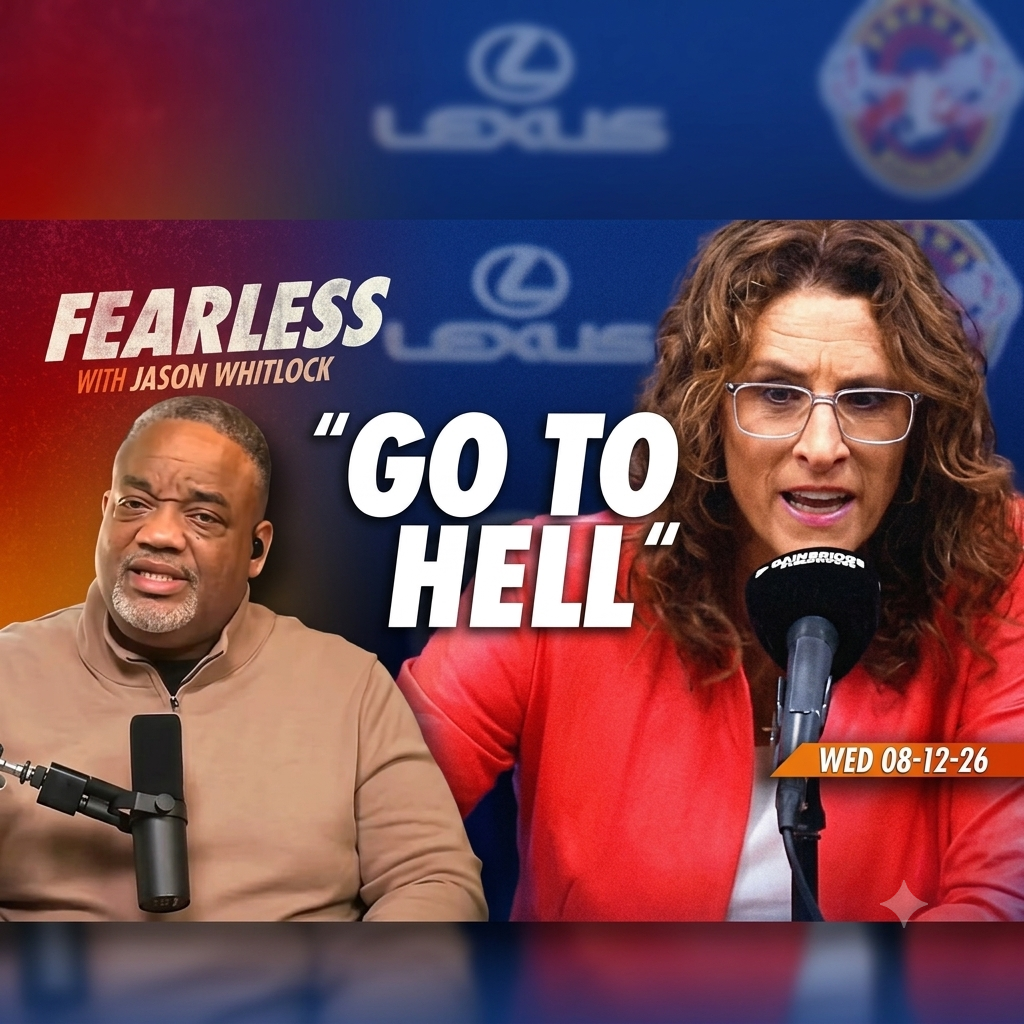
Indiana Fever head coach Stephanie White says critics trying to ‘hijack’ the WNBA can ‘go to hell’
Indiana Fever head coach Stephanie White delivered a fiery rebuke to critics she accuses of trying to “hijack” the WNBA, telling them they can “go to hell” during an impassioned pregame press conference. The outburst stemmed from fallout over her initial response to a hard foul by Chicago Sky guard DiJonai Carrington, and White used the moment to lash out at outside forces she says are exploiting the league to sow division.
The Flashpoint: A Flagrant Foul and Two Narratives
The controversy began on August 8, 2026, during the Fever’s game against the Chicago Sky. Sky guard DiJonai Carrington, defending a fast-break layup by Fever guard Sophie Cunningham, struck Cunningham in the head and neck area and sent her crashing to the floor. Officials immediately assessed Carrington a Flagrant 2 foul, and she was automatically ejected.
What truly ignited the firestorm, however, was how the play was interpreted afterward. Following her ejection, Carrington posted “white privilege” to social media and tagged the Fever, though she later clarified she never claimed the foul call itself was “white privilege.” Cunningham said after the game that she believed the foul was “absolutely intentional” and added, “It had nothing to do with race. There was no reason to play that card.”
White’s initial postgame comments — that she agreed with the call but did not believe Carrington intentionally struck Cunningham in the neck, noting Carrington was known as a “hard-nosed” player from her time with the Connecticut Sun — were interpreted by some fans and commentators as defending an opponent. The backlash was fierce. Indiana Lt. Gov. Micah Beckwith publicly called on the Fever to fire White, saying “no credible coach stands up for the other team’s player.”
White’s Outburst: From Clarification to Declaration
On August 11, ahead of the Fever’s game against the New York Liberty, White responded with a roughly two-and-a-half-minute unprompted statement. She first addressed the controversy, explaining she had not watched a replay before walking to the podium. “I thought the call was right. Thankfully Sophie is OK. Was it egregious? Absolutely. When you get a chance to look at it over and over again, you see that. I didn’t have that opportunity.”
White then pivoted from the specific play to a broader target. She made clear her remarks were “not to anybody in this room,” but to “an internet community that is trying to create a narrative that doesn’t exist,” accusing them of “making up or twisting who I am and what I stand for.”
“The hate, the fear-mongering, the division, the people who are trying to hijack our league, it will not win. It will not win,” White said, her voice rising as she struck the table with her hand. “We are united. We are connected. We will not be divided. Every single day, these women put their ass on the line. Every single day. And when they go low, we go high. Love will win. Grace will win. Humility will win. Kindness will win.”
She closed with a declaration that quickly went viral: “I stand with them. I will always stand with them. Everybody else can go to hell. ”
Players at the Center and the Broader Context
White’s remarks drew public support from her team’s biggest star. Caitlin Clark said she felt “a little sick” hearing home fans boo White during player introductions and called White “my head coach.” Sophie Cunningham hugged White after the game and said “the locker room is in a great place” and “Coach loves us.” Fever president Kelly Krauskopf issued a statement expressing “full support” for White.
White’s explosion, however, was not an isolated incident but a snapshot of a 2026 WNBA season increasingly drawn into a wider culture war. According to media monitoring figures, Fox News has aired at least 206 segments involving the WNBA since June 25, most focused on race and transgender athlete issues.
Cunningham herself has been a key node in that conflict. In a July interview with ESPN, she publicly voiced opposition to transgender women competing in women’s sports, becoming the first active professional women’s athlete to take that stance and sparking dueling rallies outside arenas. Meanwhile, online debate has simmered over whether Clark, as a white star, receives special treatment from the league, and whether Black players therefore defend her too aggressively.
Against that backdrop, White’s “go to hell” line transcended a routine defense of her players and became a raw venting of frustration at what she sees as a systemic effort to turn women’s basketball into a political battlefield. What is regrettable, as she put it, is that “we don’t get a chance to talk about the amazing basketball they’re playing.”