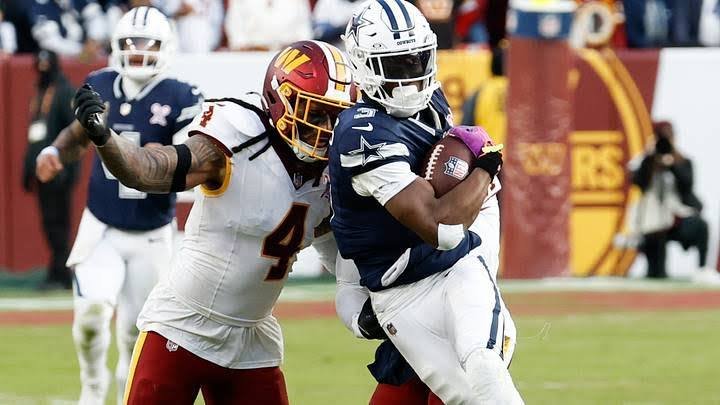
The rivalry between the Dallas Cowboys and the Washington Commanders (historically the Washington Redskins) stands as one of the most enduring, culturally significant, and fiercely contested feuds in American sports. Spanning over six decades, this NFC East divisional clash transcends the boundaries of football. It is a collision of distinct regional identities: the bold, self-proclaimed glitz of “America’s Team” matching up against the gritty, traditional football bedrock of the nation’s capital. From corporate sabotage before the first kickoff to iconic muddy brawls at RFK Stadium, the history of this rivalry is a masterclass in sports drama.The Genesis: Corporate Warfare and Counter-Melodies Unlike rivalries born out of geographic proximity, the bad blood between Dallas and Washington was manufactured before the Cowboys even played a single down. In the late 1950s, Texas oil tycoon Clint Murchison Jr. was determined to bring an NFL expansion franchise to Dallas. Standing firmly in his way was George Preston Marshall, the iron-fisted, highly conservative owner of the Washington Redskins. Marshall held a monopoly on NFL broadcasting rights in the American South, and he had no intention of allowing a new team to encroach on his lucrative television territory.Recognizing a dead-end, Murchison executed a brilliant, backhanded business maneuver. He discovered that Marshall had had a falling out with the composer of Washington’s official fight song, “Hail to the Redskins.” Seizing the opportunity, Murchison secretly purchased the copyright and publishing rights to the song for $2,500.When the NFL owners met in 1960 to vote on the Dallas expansion, Marshall remained the lone holdout. Murchison approached Marshall with an ultimatum: vote to approve the Dallas Cowboys, or Marshall would be legally barred from playing his team’s cherished fight song at home games. Cornered by his own pageantry, Marshall relented. The Dallas Cowboys were born, and a blood feud was sparked out of spite, blackmail, and corporate maneuvering.The 1970s: The Golden Age of Animosity While the 1960s saw Washington dominate an infant Dallas franchise, the 1970s transformed the rivalry into a premier national showcase. This era was defined by the clashing philosophies of two legendary, Hall of Fame head coaches: Tom Landry of Dallas and George Allen of Washington. Landry was a stoic, analytical genius who wore a fedora and treated football like a game of human chess. Allen, by contrast, was an intense, emotional motivator who openly loathed the Cowboys. Allen famously coined the phrase “Dallas Week” and reportedly banned his players from eating Texas toast or wearing anything blue in the days leading up to the game.The players embodied this hatred on the field. The 1970s rivalry featured “The Doomsday Defense” of Dallas colliding with Washington’s veteran squad, affectionately known as “The Over-the-Hill Gang.”The defining moment of this decade arrived on Thanksgiving Day in 1974. Washington linebacker Darnell Dockery knocked Dallas quarterback Roger Staubach out of the game with a severe concussion. With the Cowboys trailing 16-3, an unheralded, unknown rookie backup named Clint Longley stepped onto the field. In what became known as the “Mad Bomber” game, Longley launched a breathtaking 50-yard touchdown pass to Drew Pearson with less than thirty seconds remaining, securing a miraculous 24-23 victory.Just five years later, in the 1979 season finale, Staubach engineered another legendary comeback, overcoming a 34-21 deficit to win 35-34. The loss knocked Washington completely out of playoff contention, prompting Dallas defensive end Harvey Martin to famously hurl a black wreath into the somber Washington locker room after the game.The 1980s and 1990s: Championship Stakes As the rivalry moved into the 1980s, the stakes shifted from personal grudges to Super Bowl dominance. Under the guidance of head coach Joe Gibbs and led by a powerhouse offensive line known as “The Hogs,” Washington became a physical juggernaut.The apex of this era occurred during the 1982 NFC Championship Game at a raucous, trembling RFK Stadium. The stands literally bounced as Washington fans chanted “We Want Dallas!” Washington defensive tackle Darryl Grant intercepted a deflected pass and rumbled into the end zone, sealing a 31-17 victory that propelled Washington to a Super Bowl title.By the early 1990s, the pendulum swung back to Texas. Jerry Jones purchased the Cowboys, hired Jimmy Johnson, and drafted the legendary “Triplets”: Troy Aikman, Emmitt Smith, and Michael Irvin. While Dallas dominated the decade with three Super Bowl rings, Washington remained their ultimate spoiler. Even during the 1991 season, when Washington went a dominant 14-2 en route to a championship, one of their only regular-season blemishes was a gritty, upset loss to the Cowboys at RFK Stadium.The Modern Era: Changing Names and Shared Struggles As the NFL entered the 21st century, both franchises experienced periods of organizational instability, yet the rivalry never lost its bite. The games became characterized by thrilling, primetime finishes and unforgettable individual performances.Fans will forever remember the 2005 “Santana Moss Miracle.” Trailing 13-0 late in the fourth quarter on Monday Night Football, Washington quarterback Mark Brunell threw two deep touchdown passes to Santana Moss in the span of just one minute and ten seconds, stunning the Dallas crowd into absolute silence.The rivalry also welcomed historic individual talents like Robert Griffin III, whose dazzling Thanksgiving performance in 2012 electrified the nation, and Tony Romo, who frequently engineered cardiac-arrest finishes against Washington, including playing through a herniated disc to secure a 24-23 win in 2013.In recent years, Washington underwent a massive cultural evolution, ultimately rebranding as the Washington Commanders. Despite the identity shift, the baseline hatred remains completely unchanged.The Cultural Impact What truly makes the Dallas-Washington rivalry special is how it divides households and communities. Because Washington was the southernmost NFL team for its first three decades, it commanded a massive, loyal fan base across the American South. When the Cowboys entered the league and marketed themselves as a national brand, they fractured that traditional fan base, drawing a line in the sand across families from Virginia down to Texas.Today, as the two historic franchises clash in the 2026 NFL season, a new chapter unfolds. With Dallas looking to reassert its dominance under Dak Prescott and Washington building a fierce new identity under young cornerstone talents, the banners, names, and faces may change, but the foundational animosity remains. For over sixty years, whenever the silver helmets line up against the burgundy jerseys, it is more than just a football game—it is an ongoing battle for cultural bragging rights.