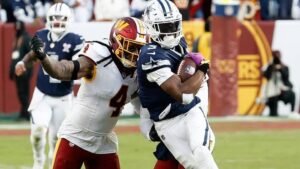
The historic rivalry between the Dallas Cowboys and the Washington Commanders enters its latest chapter at AT&T Stadium in Arlington, Texas. For both franchises, this early-season divisional matchup is far more than a standard regular-season game; it is an immediate test of identity, resilience, and tactical adjustment. Following a tough 28-20 road loss to the New York Giants in Week 1, the Cowboys return to their home turf with a palpable sense of urgency. Avoid starting 0-2—especially with both losses coming against NFC East rivals—is paramount for head coach Brian Schottenheimer.
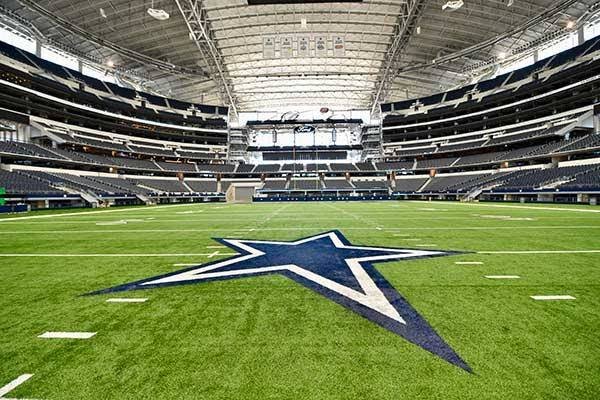
Conversely, the Washington Commanders head into the cavernous, high-tech environment of “Jerry World” looking to capitalize on early-season momentum and assert dominance in the division. In the NFL, divisional games are heavily weighted, often serving as tiebreakers in December and January. With the roof closed and the Texas sun giving way to the brilliant, blinding glare of the stadium’s massive center-hung HD video board, the stage is set for a physical, schematics-heavy battle.
The engine of the Dallas Cowboys’ offense remains quarterback Dak Prescott. Operating behind an offensive line that is missing Pro Bowl guard Tyler Smith due to recent thumb surgery, Prescott’s pre-snap recognition will be tested. Coach Schottenheimer’s system heavily emphasizes an incremental passing game designed to get the ball out of Prescott’s hands quickly, mitigation against potential protection breakdowns.
The primary target in this aerial attack is CeeDee Lamb. Coming off a disciplined Week 1 performance where he logged 44 yards and a touchdown, Lamb will be utilized as a chess piece. Expect the Cowboys to line him up frequently in the slot to avoid boundary press coverage and force Washington’s linebackers or nickel corners into unfavorable matchups. Complementing Lamb is the explosive George Pickens, whose vertical speed stretches the field. Pickens has publicly preached a high level of urgency for Week 2, and his matchup against Washington’s perimeter cornerbacks will be a critical storyline. If Pickens can win his individual battles downfield, it will prevent Washington from shading safety help over to Lamb, opening up the intermediate middle of the field.
Washington’s defensive backfield must counter this by playing disciplined, zone-matching coverages. The Commanders’ secondary will likely employ two-high safety shells initially to take away the deep ball to Pickens, daring Prescott to execute long, mistake-free drives using short checkdowns. Washington’s cornerbacks must be physical at the line of scrimmage, disrupting the timing of Dallas’ quick-slants and hitch routes.
With Tyler Smith sidelined, the interior of the Dallas offensive line faces a monumental challenge. The Cowboys’ run game, spearheaded by Javonte Williams and the newly promoted Tyler Goodson, managed only modest production in the season opener. To alleviate pressure on Prescott, Dallas must establish a functional rushing attack. Williams is a physical, downhill runner who excels at breaking initial contact, but his success depends entirely on the blocking cohesion between the center and the replacement guards. If Dallas can establish an effective zone-blocking scheme, it will slow down Washington’s aggressive pass rushers and make their play-action passing game highly effective.
For the Washington Commanders, the game plan starts with disrupting the interior pocket. Their defensive front will look to exploit the void left by Tyler Smith, using stunt and twist packages to confuse the reshuffled Cowboys line. If Washington can collapse the pocket from the inside, Prescott will be unable to step up into his throws, forcing him into hurried decisions or checkdowns to the flat.
On the flip side, the Dallas defense must generate pressure without sacrificing coverage integrity. Defensive leader Donovan Ezeiruaku, who recorded 10 tackles and a half-sack in Week 1, will be the focal point of the Cowboys’ pass rush. Dallas will use creative alignment variations, frequently moving Ezeiruaku across the line to find the weakest link in Washington’s offensive tackle pairing.
Injuries are the ultimate equalizer in the NFL, and Dallas enters this game noticeably short-handed. Beyond the loss of Tyler Smith on offense, the Cowboys’ defense is dealing with significant depth issues. Safety Malik Hooker and linebacker DeMarvion Overshown are both sidelined, forcing defensive coordinators to reconfigure their personnel groupings.
To compensate for Hooker’s absence in the secondary, Dallas will likely rely on heavier usage of sub-packages, bringing in extra defensive backs to prevent deep passing plays while asking their remaining linebackers to play more laterally. The loss of Overshown hurts the team’s sideline-to-sideline speed, making them potentially vulnerable to Washington’s screen passes, sweep plays, and tight end options across the middle. Dallas’ defensive success will depend heavily on disciplined gap assignment; defenders cannot afford to over-pursue and leave cutback lanes open.
In a game where the margins of victory are razor-thin, special teams play at AT&T Stadium can easily tilt the balance of power. The stadium is notorious for its unique environmental factors—specifically, how the afternoon sunlight can pierce through the massive end-zone glass panels, sometimes blinding returners or receivers tracking high-pointing footballs. However, for a prime-time or controlled-environment setting, the focus shifts entirely to the turf quality and structural acoustics. The booming crowd noise generated by nearly 100,000 fans can completely disrupt an opposing offense’s verbal audibles and silent-count timing.
Field position will be a critical metric. The Cowboys’ coverage units must be flawless against Washington’s return specialists, forcing them to start drives deep inside their own territory. Meanwhile, Dallas’ kicking game needs to remain perfect; executing field goals when drives stall in the red zone will be vital to keeping the scoreboard moving.
Ultimately, the battle at AT&T Stadium will be decided by execution under pressure. For the Dallas Cowboys, victory requires protecting Dak Prescott, establishing a balanced ground game with Williams to keep the defense honest, and forcing Washington into third-and-long situations where the pass rush can dictate the tempo. For Washington, the blueprint involves exploiting Dallas’ injured interior line, testing the depleted linebacker depth with a creative short-to-intermediate passing game, and silencing the raucous home crowd early. In the unforgiving landscape of the NFC East, this matchup will serve as a definitive barometer for where both teams are headed in the 2026 season.