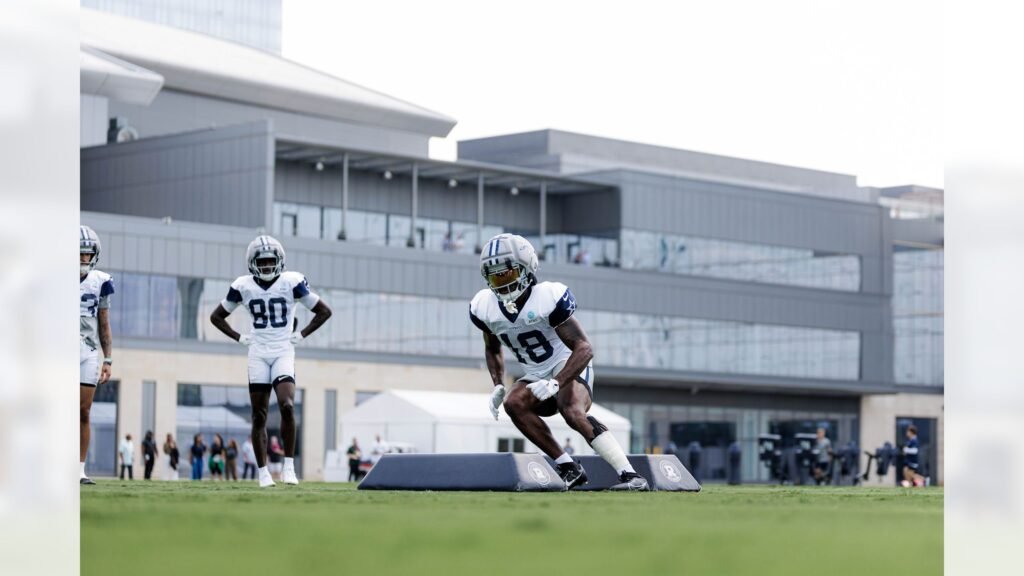
The Dallas Cowboys enter their 2026 home opener against the Washington Commanders facing an immediate, high-stakes test of resiliency. Following a disappointing 28-20 defeat to the New York Giants in Week 1, the atmosphere inside the star-studded facilities at The Star in Frisco has shifted from optimistic to urgent. To avoid a devastating 0-2 start within the hyper-competitive NFC East division, head coach Brian Schottenheimer and defensive coordinator Christian Parker have spent the week restructuring their schemes. The Cowboys must execute a comprehensive bounce-back performance on Sunday afternoon at AT&T Stadium, an effort that hinges on correcting fundamental defensive failures, managing critical player injuries, and unlocking a highly paid offense.The Anatomy of the Week 1 BreakdownTo understand the blueprint for Dallas’s bounce-back strategy, one must analyze the systemic breakdowns that occurred during their opening loss to the Giants. The most alarming failure was the defense’s complete inability to secure the perimeter. The unit surrendered a staggering 165 rushing yards, with the Giants repeatedly utilizing outside zone runs and stretch plays to exploit the secondary and linebacker levels.Dallas’s defensive front, anchored by high-profile interior stars like Quinnen Williams and Kenny Clark, frequently found themselves washed down inside, leaving the edges completely vulnerable. Furthermore, the pass rush struggled to affect the pocket under Parker’s new scheme, generating a meager two pressures on 20 distinct four-man rushes. This lack of pressure exposed a young secondary, forcing defensive backs into extended coverage scenarios that ultimately broke down under pressure.Overcoming Structural Linebacker TurmoilThe path to redemption is severely complicated by a sudden medical crisis in the middle of the defense. Starting linebacker DeMarvion Overshown, who serves as the athletic heart of the defense, was officially ruled out for Week 2 after sustaining a severe hamstring injury against New York. In addition to losing his sideline-to-sideline speed, Dallas lost its designated “green dot” play-caller—the single player trusted to wear the audio transmitter in his helmet to relay signals from the coaching staff to the field.In a bold decision that has drawn intense scrutiny from analysts, Schottenheimer and Parker passed the green dot responsibilities to rookie third-round draft choice Jaishawn Barham. Barham’s debut in Week 1 was highly volatile; the rookie missed critical tackles and was captured on broadcast footage having a heated sideline dispute with Coordinator Parker.[Defensive Coordinator: Christian Parker]
│
▼ (Live Radio Helmet Feed)
[Rookie LB: Jaishawn Barham (Green Dot)]
│
▼ (Vocal On-Field Audibles)
[11-Man Defensive Alignment]
Despite the early friction, the organization has rallied around the rookie. Elite wide receiver CeeDee Lamb publicly defended Barham’s fiery demeanor this week, emphasizing that an aggressive edge is exactly what the locker room requires after a soft opening performance. Barham’s ability to cleanly orchestrate defensive adjustments against Washington’s multi-faceted offense will dictate the game’s outcome.Mending a Shorthanded SecondaryCompounding the loss of Overshown, veteran safety Malik Hooker has also been ruled out for Sunday’s contest due to injury. Hooker’s absence robs the defense of its traditional deep-third safety net, forcing Dallas to lean heavily on sensational rookie defender Caleb Downs. Downs will be tasked with playing a hybrid role—helping choke out the running game near the line of scrimmage while ensuring Washington’s speedy wideouts do not get over the top of the defense.Parker’s primary adjustments in practice centered on spatial discipline. The coaching staff implemented rigid edge-setting drills for defensive ends and outside linebackers, demanding that players hold their ground rather than chasing inside plays, thereby forcing ball-carriers back into pursuing help.Unleashing the Multi-Million Dollar OffenseKnowing the defense is operating with significant limitations, the burden to secure a bounce-back victory shifts heavily to quarterback Dak Prescott and the offense. In Week 1, the unit looked uncharacteristically conservative, generating a quiet 244 total yards as Schottenheimer tried to establish a ground game that never found its rhythm.For Week 2, the game plan has pivoted toward vertical aggression. Prescott historically dominates the Washington franchise, carrying a remarkable 13-2 career record against his divisional rivals. The Commanders secondary struggled significantly in their own opener, yielding 318 passing yards to the Philadelphia Eagles. Dallas aims to exploit this vulnerability immediately.The strategy focuses on feeding the dynamic receiving tandem of CeeDee Lamb and George Pickens early and often. By pushing the ball downfield on early downs, Dallas intends to build an early lead, forcing Washington into a predictable passing script that shields the Cowboys’ adjusted linebacker group from complex running schemes.Tactical Matchup BreakdownDallas Bounce-Back KeyWashington Primary ThreatDallas X-FactorPerimeter ContainmentQB Jayden Daniels’ RushingSafety Caleb DownsRookie CommunicationCoach Greg Roman’s RPO SchemeLB Jaishawn BarhamVertical Passing GameVulnerable Deep SecondaryWR George Pickens & CeeDee LambOwner Backing and Fan ExpectationsThe urgency surrounding this home opener was amplified by owner Jerry Jones during his weekly appearance on 105.3 The Fan. Jones fiercely defended the coaching staff’s preparation while acknowledging the absolute necessity of an improved on-field product. Jones guaranteed fans that the communication breakdowns witnessed in Week 1 were resolved, expressing total confidence in Barham’s leadership and Prescott’s ability to command the game. Playing under the closed roof of AT&T Stadium, the turf conditions will favor Dallas’s elite speed on both sides of the ball.Ultimately, Sunday is about setting the tone for the remainder of the 2026 calendar. Elite franchises are defined by how rapidly they diagnose and repair their flaws. If the Cowboys successfully establish the edge defensively and allow Prescott to dictate the tempo through the air, they will reassert themselves as NFC East heavyweights. A failure to execute, however, will leave Dallas in an early-season division hole that is notoriously difficult to climb out of.