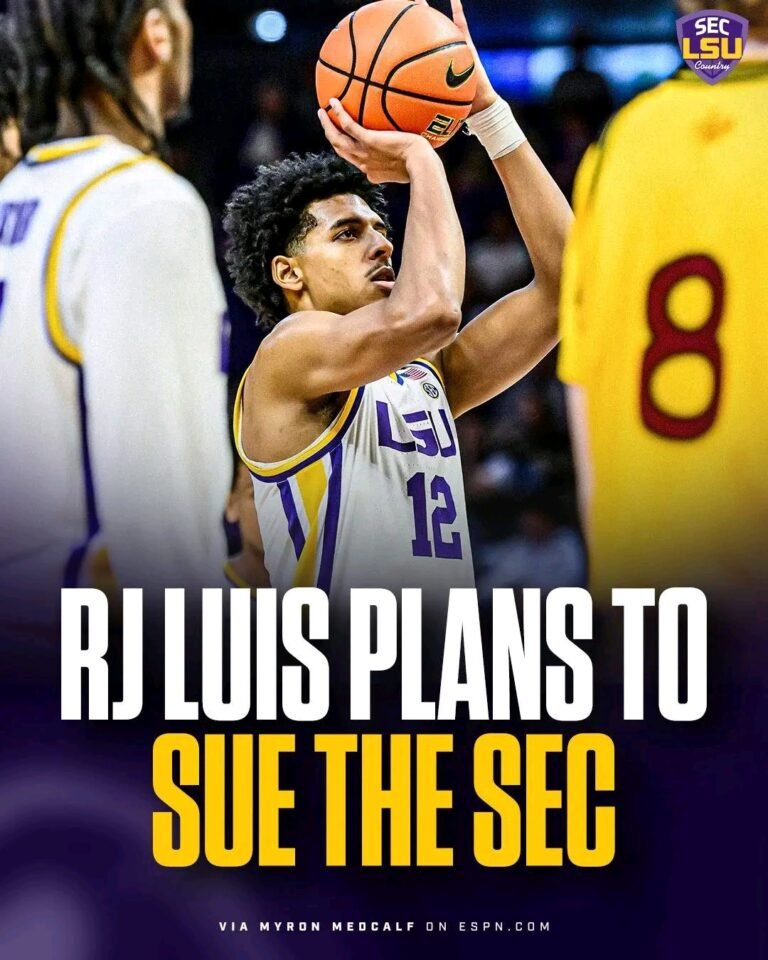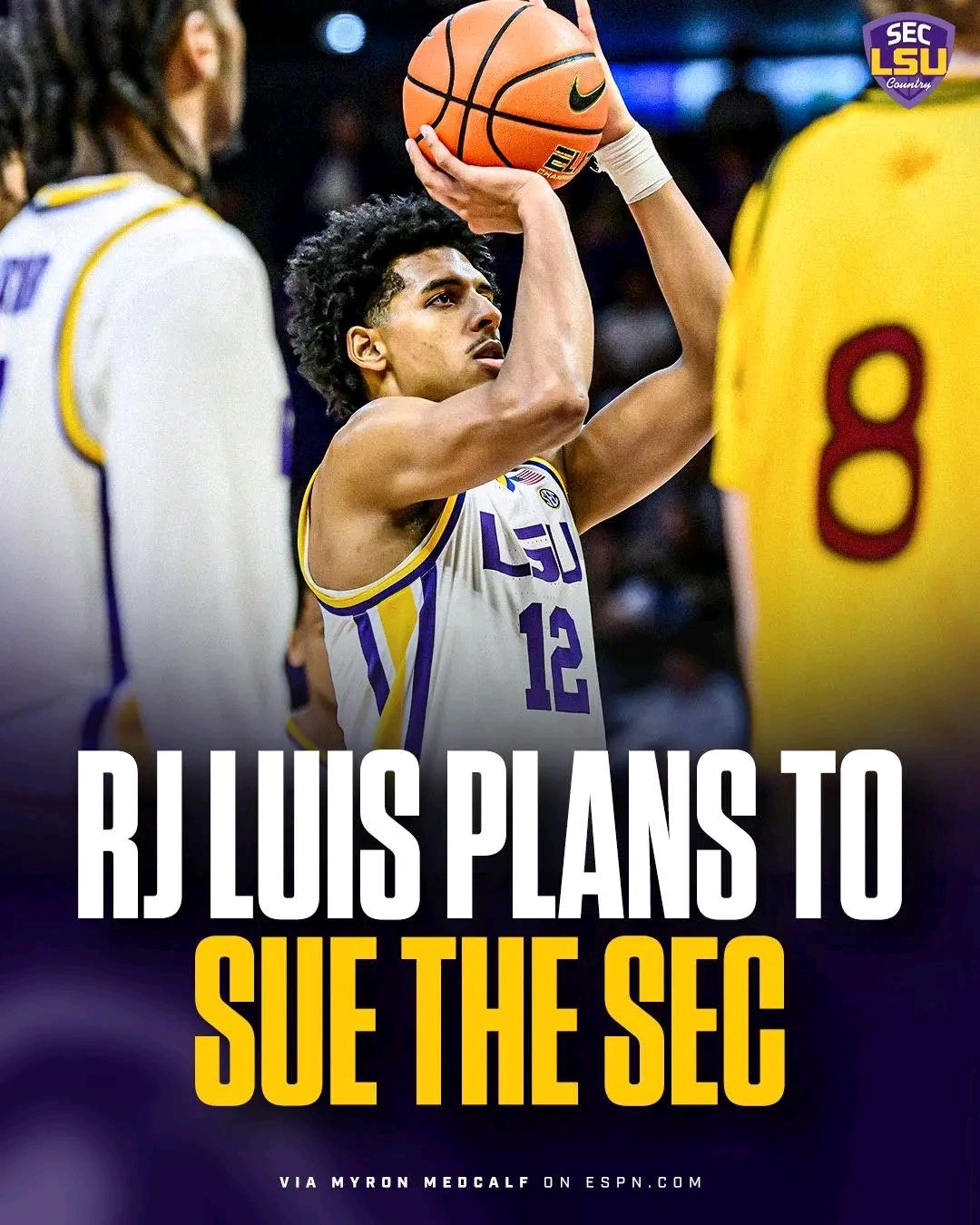
 LSU basketball’s ongoing eligibility controversy involving RJ Luis Jr. has taken another dramatic turn, with the reigning Big East Player of the Year reportedly preparing to take legal action against the Southeastern Conference (SEC) and its commissioner, Greg Sankey.
According to ESPN’s Myron Medcalf, Luis intends to sue the SEC and Sankey for damages connected to the eligibility dispute that has disrupted his highly anticipated season with the LSU Tigers.
The development adds another layer of uncertainty to an already complicated situation involving the player, the university and one of college sports’ most powerful conferences.
Luis, who earned Big East Player of the Year honors in 2025, arrived at LSU with considerable expectations.
His experience, scoring ability and leadership were expected to make him an important addition to the Tigers’ basketball programme.
However, those expectations quickly turned into frustration as questions surrounding his eligibility prevented him from having the impact many had anticipated.
The talented guard managed to appear in just one game for LSU before stepping away from the programme amid the continuing eligibility battle.
His limited involvement has raised serious questions about the circumstances surrounding his transfer, his playing status and the consequences of the SEC’s position on the matter.
For Luis, the dispute appears to have moved beyond simply fighting for an opportunity to play basketball.
The reported decision to pursue damages suggests that the situation could now become a significant legal battle, potentially examining the authority of conference officials and the rules governing player eligibility in college athletics.
At the centre of the controversy is SEC commissioner Greg Sankey, one of the most influential figures in American college sports.
Any legal action involving Sankey and the conference could attract considerable attention, particularly at a time when college athletics is undergoing major changes involving player compensation, transfers, eligibility regulations and institutional accountability.
The timing is also particularly sensitive for LSU.
The university’s future relationship with the SEC is reportedly set to become a topic of discussion when conference presidents and chancellors meet on December 3.
That meeting could prove significant, as administrators consider the broader implications of LSU’s situation and its relationship with the conference.
Although the reported lawsuit and the scheduled meeting are separate developments, their proximity has intensified speculation about the potential consequences for the Tigers.
LSU remains one of the most recognisable athletic programmes in the SEC, making any discussion about its future membership particularly noteworthy.
For now, Luis’s reported legal intentions represent another major development in a dispute that has already cost him valuable playing time and LSU a player expected to contribute significantly.
The bigger question is whether this situation will remain an individual eligibility dispute or develop into a wider confrontation over the power of college conferences to determine players’ futures.
One thing is certain:
what began as a basketball eligibility controversy could become one of the most closely watched legal and administrative battles in college athletics.
About the Author