Sir Jim Ratcliffe claims he’s made Manchester United better despite string of ‘unpopular’ decisions
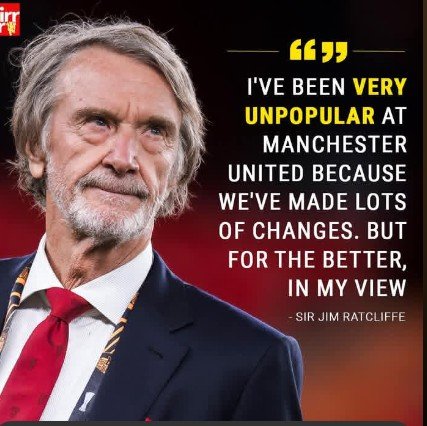
Sir Jim Ratcliffe has insisted that Manchester United are on the right path under his leadership, despite acknowledging that several of his decisions since taking control of football operations have been deeply unpopular with supporters.
The British billionaire, who acquired a significant stake in the club and assumed responsibility for sporting matters, has overseen a period of sweeping change at Old Trafford. Cost-cutting measures, structural reshuffles behind the scenes and high-profile managerial changes have defined the early months of his tenure. While many fans have voiced frustration and concern, Ratcliffe maintains that the long-term health of the club required bold and, at times, uncomfortable action.
Speaking about the criticism he has faced, Ratcliffe admitted he understood why some supporters were unhappy. However, he argued that difficult decisions are often necessary to restore elite standards. “If you want to get back to the top, you can’t avoid making hard choices,” he suggested, framing the backlash as a short-term consequence of pursuing long-term success.
Among the most contentious moves were reductions in staffing levels and operational restructuring aimed at improving efficiency. The club also implemented changes affecting matchday operations and ticket pricing, sparking protests from sections of the fanbase who felt disconnected from the decision-making process. For many supporters, Manchester United is more than a business, and concerns have been raised about preserving the club’s identity and traditions.
On the football side, Ratcliffe sanctioned changes to the managerial setup following inconsistent performances and a disappointing league campaign. The shift was presented as part of a broader strategy to modernise recruitment, data analysis and performance structures. While managerial turnover can create instability, Ratcliffe believes the reset was essential to build a coherent, competitive project.
Results on the pitch have shown signs of improvement, offering some encouragement to those backing the new direction. Performances have become more consistent, and there is a renewed emphasis on tactical discipline and squad development. Though the club is still in transition, there is cautious optimism that foundations are being laid for sustained progress rather than short-term fixes.
Ratcliffe has also spoken about financial sustainability, highlighting the importance of operating within responsible limits while remaining competitive. He has indicated that smarter investment, rather than extravagant spending, will define the club’s recruitment strategy moving forward. In his view, restoring Manchester United to the summit of English and European football depends on strong leadership, clear planning and patience.
Critics, however, argue that success cannot be measured solely by balance sheets and structural reforms. They point to the emotional bond between club and supporters, warning that alienating loyal fans risks long-term damage. Some remain unconvinced that the upheaval was necessary or that it will ultimately deliver silverware.
For Ratcliffe, the transformation of Manchester United is a project measured in years, not months. He has stressed that rebuilding a club of such scale requires resilience in the face of criticism. While acknowledging the discomfort caused by change, he remains adamant that the decisions made so far have strengthened the club’s foundations.
Whether those choices will translate into trophies and a return to former glory remains to be seen. But Ratcliffe’s message is clear: unpopularity, in his view, is sometimes the price of progress.