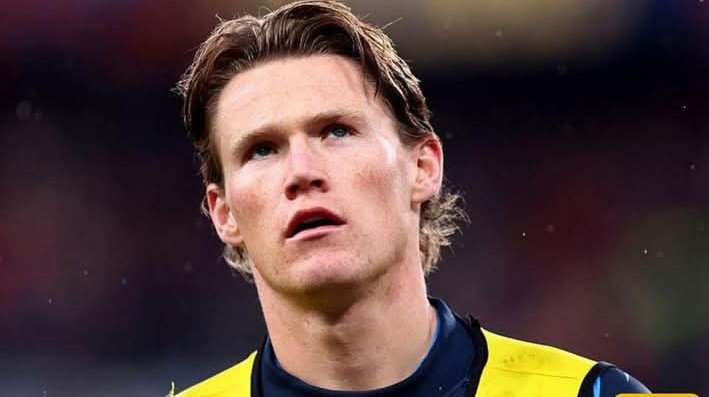
Man United star accused of blocking Scott McTominay return with future uncertain
Speculation surrounding a potential return for Scott McTominay has taken an intriguing twist, with one Manchester United star now being accused of indirectly blocking the midfielder’s path back to Old Trafford. As rumours swirl about McTominay’s long-term future, questions are also being raised about the current midfield hierarchy at United and whether there is room — or even a desire — for a reunion.
McTominay left Manchester United in search of a more prominent role, and his move to SSC Napoli proved transformative.
In Italy, the Scotland international has flourished, earning praise for his physical presence, late runs into the box and leadership qualities. His performances have only increased interest in what might have been had he remained in the Premier League — or what could still be if a return materialised.
However, some pundits believe that United’s current setup makes such a move unlikely. Much of the debate centres on the influence of captain Bruno Fernandes. As United’s creative focal point, Fernandes occupies an advanced midfield role that shapes the team’s tactical identity. Critics argue that the system built around him leaves limited tactical flexibility, potentially squeezing out a player of McTominay’s profile.
Former Scotland manager Gordon Strachan has suggested that McTominay is better suited to the dynamic, transitional style he enjoys in Serie A rather than the more possession-heavy approach often deployed at Manchester United. According to that viewpoint, it is not a personal block but a structural one: the way United are built simply does not prioritise the attributes McTominay brings.
The accusation that a United star is “blocking” the move may therefore be more symbolic than literal. Fernandes is not standing in the way of negotiations, nor has he publicly opposed any transfer activity. Instead, the claim reflects how central he remains to the club’s tactical blueprint. When a team is constructed around a creative playmaker, other midfield roles are adapted accordingly, often favouring technical control over box-to-box power.
Meanwhile, McTominay’s future remains uncertain for different reasons. Napoli are reluctant to part with a player who has become integral to their midfield balance. His market value has risen, and any deal would require significant financial commitment. From United’s perspective, recruitment priorities may lie elsewhere, particularly if they believe existing options can fulfil similar responsibilities.
There is also the broader question of timing. Football careers are shaped by momentum, and McTominay appears to have found the perfect environment to maximise his strengths. A return to Manchester would inevitably invite comparisons with his previous spell and place him under renewed scrutiny.
Stability in Naples may outweigh the sentimental appeal of going back.
Ultimately, the narrative of a star blocking McTominay’s return simplifies a complex situation. Tactical identity, financial realities and squad planning all play decisive roles. While the door to Old Trafford is not definitively closed, it is far from wide open.
Until clearer signals emerge from both clubs, McTominay’s future — and the debate surrounding it — will remain unresolved.