The Return of Standards: Manchester United’s Shift Towards Discipline and Unity
For years, Manchester United’s dressing room was a stage for the drama, the leaks, and the social media buzz. Stories of player discontent, agent spats, and public fallouts became all too common. From the sulking of star players to the constant speculation about transfers and behind-the-scenes drama, it seemed like the club was fighting a battle off the pitch just as much as on it. But recently, something has shifted. The noise has quieted. And it’s not by accident.
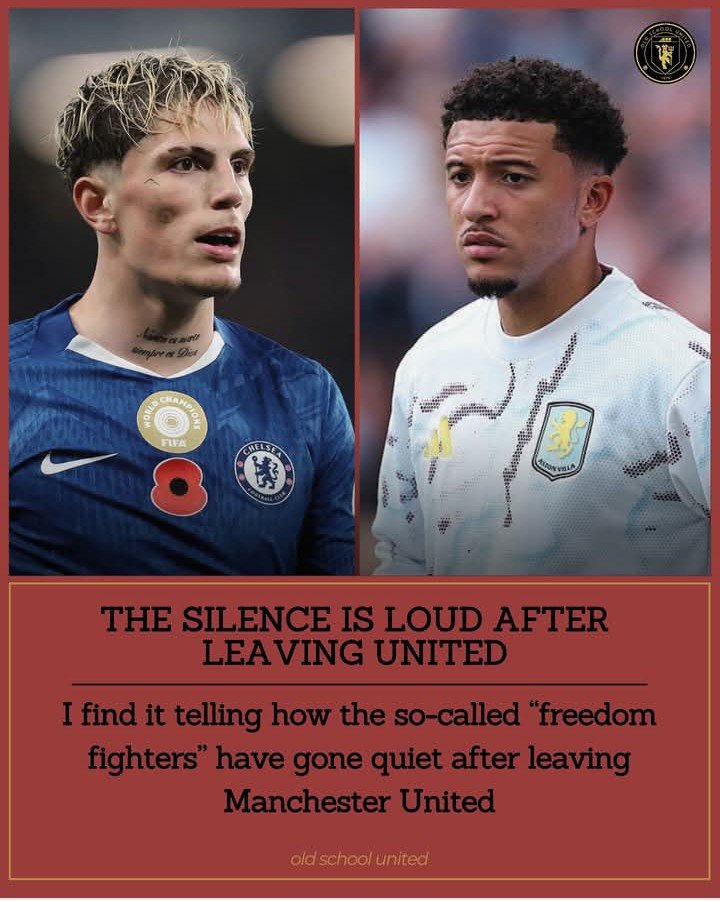
Take Alejandro Garnacho, for example. Before his move to Chelsea, the Argentine winger made headlines when he promised he would not play football for six months if he didn’t make the switch. That’s a bold statement, a move that reflects the level of confidence, or perhaps entitlement, many players feel today.
However, after his move, the spotlight he once thrived in has dimmed. He finds himself on the bench more often than not, and yet there are no complaints, no leaks, no social media rants. Funny how that works when the safety net of constant media attention is gone.
Similarly, Jadon Sancho’s post-Manchester United career has been a far cry from the expectations many had for him when he left the Premier League for Borussia Dortmund. After his big-money move to Old Trafford, he struggled to find consistency on the pitch, and since leaving United, his journey has been filled with more uncertainty than triumph.
Once considered one of England’s brightest talents, Sancho now appears to be a cautionary tale of how quickly the hype can dissipate when a player forgets the importance of humility, work ethic, and team-first mentality.
These examples reflect a broader issue that many United fans and pundits have raised: the sense of entitlement that has crept into the club’s squad over the last decade. The power of social media, player entourages, and constant media speculation has allowed players to feel bigger than the club. At times, it seemed like the circus around the team was just as important as the actual football being played.
What frustrates many supporters, especially those who lived through the glory years under Sir Alex Ferguson, is that this kind of behavior was allowed to linger for far too long. Under Ferguson, there was no room for egos. If a player thought they were bigger than the club, they were gone—no hesitation.
The message was clear: Manchester United was a team, and every player was expected to respect that hierarchy. It was about the badge, the manager, and the collective. Not individual status.
The shift in tone we’re seeing now under Erik ten Hag is significant. The manager has made it clear that there is no room for players who disrupt the dressing room or disrespect the culture of the club.
His decisions to move on players like Cristiano Ronaldo, who created unnecessary distractions, and to bench high-profile names like Sancho when necessary, signals a return to the core values that United were built on.
This sense of discipline is critical for the club moving forward. It’s about creating a squad that respects each other, the manager, and most importantly, the badge they represent.
The focus is shifting from entitlement to hunger, from drama to professionalism. And if this shift continues, it could be the foundation for a successful, sustainable future. Better times may indeed follow—if the standards remain high and the club’s discipline is unwavering.
Does this work for what you had in mind?