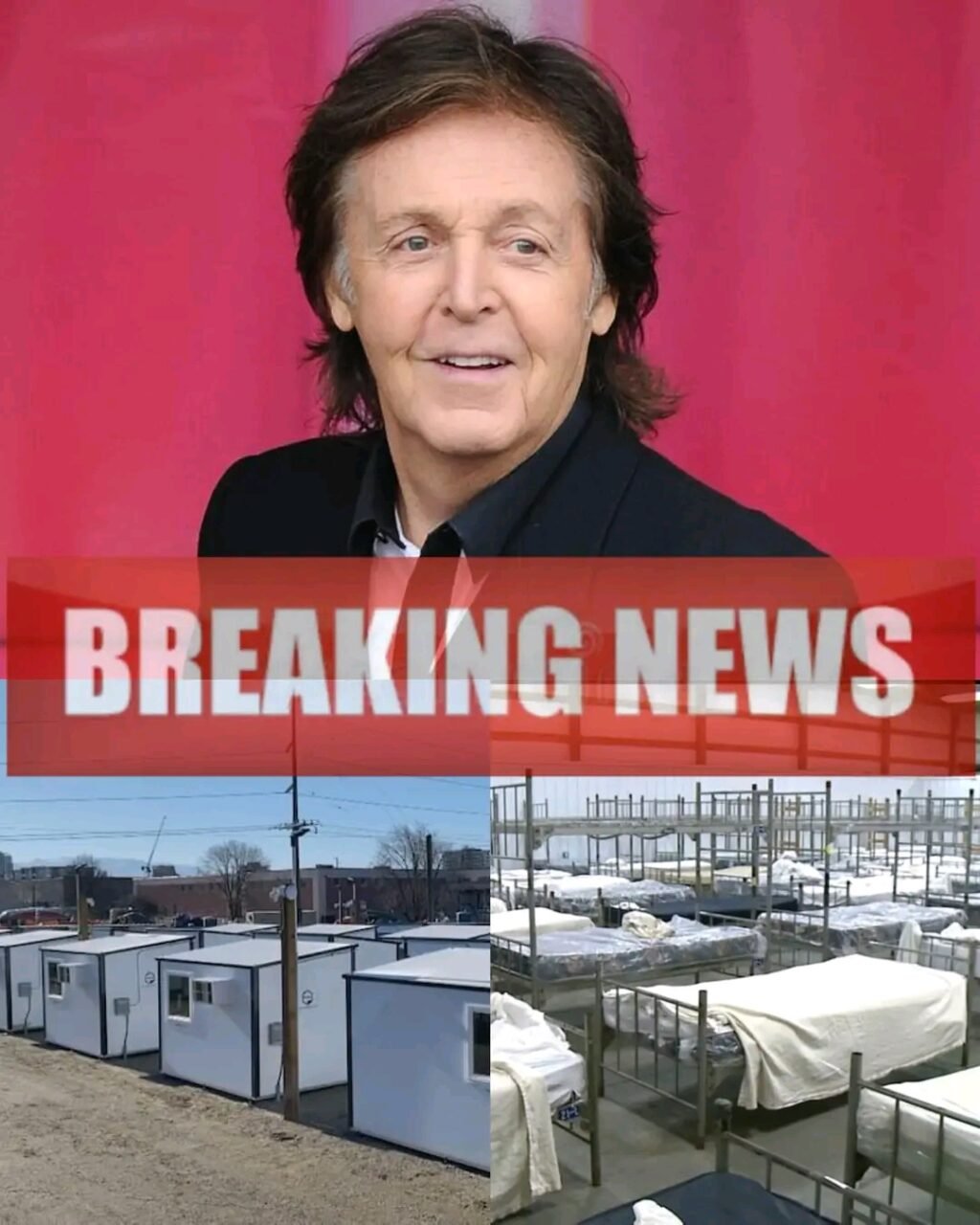
In a stunning act of generosity that has sent shockwaves through the music world and beyond, legendary Beatles icon **Paul McCartney** has donated his entire $15.9 million bonus—earned from recent tours, sponsorships, and royalties—to fund a major homelessness initiative in his hometown of Liverpool.
The announcement, made during an emotional press conference outside a historic Liverpool venue, marks one of the most significant personal contributions to social housing in the UK in recent memory. The funds will directly support the construction of **150 new housing units** and provide **300 emergency shelter beds**, offering permanent and temporary solutions for hundreds facing homelessness in the city where McCartney grew up.
“I’ve seen the effects of homelessness firsthand growing up here in Liverpool,” McCartney told reporters, his voice steady but laced with deep feeling. “I remember the struggles, the cold streets, the people who just needed a chance. If I ever had the means to make a real difference, I always said I’d give back in a meaningful way. No one deserves to sleep on a sidewalk. No one.”
The donation comes at a time when Liverpool, like many UK cities, grapples with rising homelessness figures. Local charities and council reports have highlighted increasing numbers of rough sleepers and families in temporary accommodation, exacerbated by economic pressures, housing shortages, and post-pandemic recovery challenges. McCartney’s gift is expected to transform a derelict site in the city center into a modern mixed-use development: secure apartments for long-term residents, emergency beds with on-site support services, communal spaces for job training, counseling, and community events.
The project, partnered with established Liverpool homelessness organizations including The Whitechapel Centre and local housing associations, aims to break the cycle of homelessness by combining immediate shelter with pathways to independence. Plans include on-site mental health support, addiction recovery programs, vocational training tied to Liverpool’s creative industries, and family-friendly units to prevent children from experiencing street life.
McCartney, now in his 80s but still active in music and philanthropy, has long been known for quiet generosity. From supporting animal rights with PETA to environmental causes and past aid for disaster relief, his charitable footprint is vast. Yet this donation stands out for its scale and deeply personal tie to his roots. Born in Liverpool in 1942, McCartney grew up in working-class neighborhoods where poverty and hardship were never far away. He has often spoken about how those early experiences shaped his worldview and fueled songs like “Eleanor Rigby,” which poignantly captured isolation and forgotten lives.
“This isn’t just money—it’s hope,” said Sarah Thompson, director of a partnering Liverpool charity involved in the project. “Sir Paul’s contribution will change lives for generations. We’re talking about real homes, not just beds for a night. Families will have stability, young people will have futures, and the city he loves will see tangible progress against one of its toughest challenges.”
The $15.9 million figure represents McCartney’s full bonus payout from his most recent global tour cycle and high-profile brand partnerships, which he chose to redirect entirely rather than pocket or invest personally. Sources close to the musician say the decision was made swiftly after reviewing updated homelessness statistics for Merseyside. “He didn’t hesitate,” one associate shared. “Paul said, ‘If not now, when? If not me, who?'”
Public reaction has been overwhelming. Social media erupted with praise, with fans sharing childhood memories of Liverpool’s streets and expressing gratitude for McCartney’s enduring connection to his origins. Hashtags like #ThankYouPaul and #LiverpoolGivesBack trended globally within hours. Fellow musicians, including former bandmate Ringo Starr and younger artists influenced by The Beatles, offered public support, calling it “a masterclass in using success for good.”
Local politicians weighed in too. The Mayor of the Liverpool City Region praised the move as “transformative,” noting it would complement public efforts and inspire private-sector involvement. “Sir Paul has reminded us all what community looks like,” the mayor stated. “This isn’t charity—it’s investment in people.”
The project timeline targets initial shelter beds opening within 18 months, with full housing completion in three to four years. Architects have designed the development to blend seamlessly into Liverpool’s historic fabric, incorporating green spaces, music rooms (a nod to McCartney’s legacy), and public art installations celebrating the city’s creative heritage.
For McCartney, the act feels full-circle. The boy from Forthlin Road who rose to global superstardom never forgot where he came from. In giving away this fortune, he’s not just building walls and roofs—he’s rebuilding dignity, one life at a time.
As the press conference wrapped, McCartney looked out over the Mersey, the river that has inspired so much of his music. “Liverpool gave me everything,” he said quietly. “This is my way of saying thank you—and of making sure no one here is left behind.”
In an era often defined by excess, Paul McCartney’s $15.9 million gift stands as a powerful reminder: true legacy isn’t measured in wealth accumulated, but in lives lifted up.